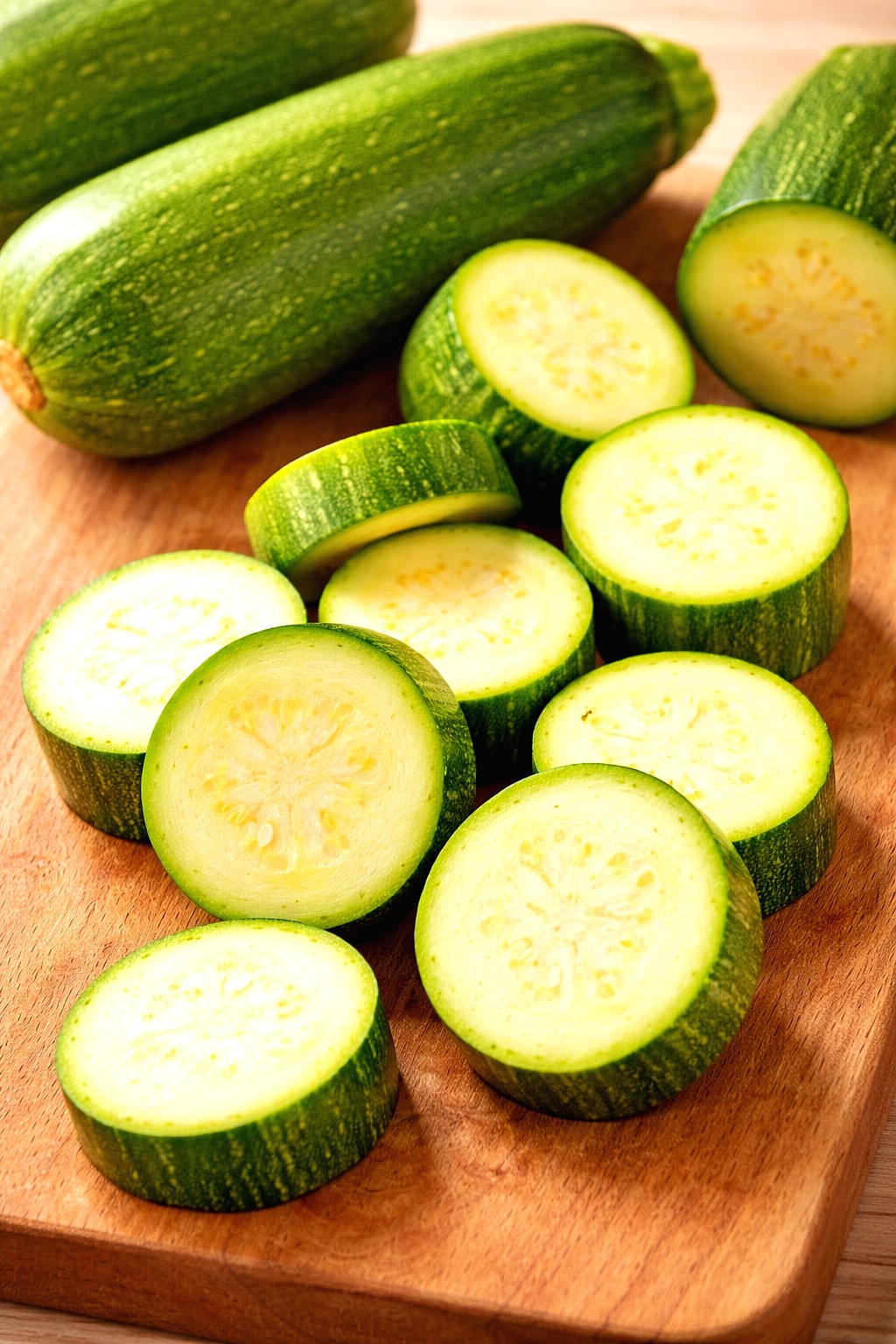
 That white sticky sap on zucchini is almost always completely harmless.
Almost.
In 2018, a family in France sat down to a meal of homegrown zucchini. Within two hours, every person at the table was vomiting. One required hospitalization. The zucchini looked normal. It smelled normal. The only thing unusual was a slightly bitter taste — which they noticed, and ignored.
That bitterness was the warning they missed.
Safe zucchini sap and the toxic version look identical. You cannot tell them apart by sight. But once you understand what causes one versus the other — and learn a single three-second test — you’ll never have to guess again.
What Happened to That Family — And Why It Matters to You
It has a name: toxic squash syndrome. It’s documented in poison control databases across Europe and has been reported in the United States, Australia, and elsewhere. French researchers published a case series describing 353 reported cases — all linked to homegrown cucurbit vegetables, most commonly zucchini.
Symptoms appear fast. Within one to six hours of eating the affected vegetable: severe stomach cramps, nausea, vomiting, diarrhea. Most cases resolve within 24 hours. In the most severe documented cases — where toxin levels were extraordinarily high — patients experienced hair loss beginning two to four weeks after the initial poisoning. Researchers believe the toxin interferes with cell division in hair follicles.
None of these people ate something that looked dangerous. No mold. No unusual color. No obvious spoilage. The vegetable looked perfectly normal right up until it put people in the hospital.
So what was actually inside it?
The Toxin Hidden Inside Every Zucchini
Every zucchini contains cucurbitacins — bitter chemical compounds produced naturally by the entire cucurbit family: zucchini, cucumbers, squash, pumpkins, melons. In the wild, these compounds are a survival mechanism. They make the plant taste foul to insects and animals that might eat it before the seeds mature.
Modern commercial zucchini has been selectively bred over generations to suppress cucurbitacin production almost entirely. The levels in a supermarket zucchini are so low you’d have to eat an implausible quantity to feel anything. For all practical purposes, commercial zucchini is safe.
But here’s what matters: suppression is not elimination. But that genetic toolkit is still there. Under the right conditions, the plant overrides that suppression — and floods the vegetable with the compound. When that happens, the levels can be high enough to cause serious harm.
Here’s exactly when it happens.
Two Conditions That Make Zucchini Dangerous
Almost every documented case of toxic squash syndrome traces back to one of two causes. Knowing them tells you immediately whether your zucchini is at risk — or whether you can stop worrying entirely.
Cross-pollination with wild or ornamental cucurbits
Zucchini plants are pollinated by bees. Bees don’t read garden plans. They move freely between your cultivated zucchini and any ornamental gourds, wild cucurbits, or neighboring cucurbit plants within flight range — transferring pollen between plants that were never meant to breed together.
When pollen from a high-cucurbitacin plant fertilizes a low-cucurbitacin zucchini, the resulting fruit can carry dramatically elevated toxin levels. That zucchini grows normally. It looks normal. It feels normal at harvest.The only evidence of what happened is in the taste.
Ornamental gourds are the most common culprit — planted nearby for decoration, with most gardeners never realizing they can cross-pollinate with food crops. Wild cucurbit plants growing along a fence line can cause the same problem.
Severe plant stress during growing
Environmental stress is the second trigger. Extreme drought, inconsistent watering, prolonged heat, or significant nutrient deficiency pushes the plant into survival mode — and cucurbitacin production is one of its primary responses. A zucchini that endured a stressed growing season may look healthy at harvest, but the chemical changes happened weeks earlier, distributed throughout the flesh.
Both of these causes share one critical feature: they are almost exclusively a home garden problem. Commercial zucchini is grown from certified low-cucurbitacin seed varieties, under professional irrigation management, with consistent growing conditions.
If your zucchini came from a supermarket or farmers market: the risk is negligibly small. Stop worrying and keep reading for the freshness information below.
If you grow your own — especially if ornamental plants grow nearby — the next section is the most important thing you’ll read about zucchini.
Three-Second Test That Tells You Everything
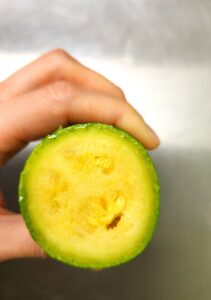
Before cooking any homegrown zucchini, do this: cut a small piece and taste the raw flesh.
Not a polite nibble. An actual taste, held on your tongue for a moment.
A safe zucchini tastes mild, slightly sweet, faintly vegetal — like a mild cucumber. There may be the faintest edge of bitterness, which is normal at safe cucurbitacin levels.
A dangerous zucchini tastes intensely, harshly, unmistakably bitter. Not subtle.That sharp, medicinal bitterness hits immediately and makes you want to spit it out. If you’ve ever accidentally bitten into a truly bitter cucumber, you know the flavor profile. Toxic zucchini tastes worse than that.
Taste that bitterness? Stop. Throw it out. Don’t try to cook around it, soak it out, or mask it with seasoning.
Cooking concentrates cucurbitacins rather than neutralizing them. As the vegetable loses water during cooking, the toxin becomes more concentrated in what remains. A mildly bitter raw zucchini becomes more bitter — and more dangerous — after cooking. There is no preparation method that makes a bitter zucchini safe to eat.
So What Is the Sticky Sap on Zucchini?
Now that the serious part is handled — what does the zucchini sticky sap actually tell you day to day?
The sticky substance that appears when you cut zucchini is plant sap: pressurized cellular fluid that carries water and nutrients through the vegetable. Zucchini is more than 94% water by weight, held under tension inside individual plant cells. Cut through the skin and you release that pressure — sap flows out. It is not a sign of damage, disease, or spoilage. It is simply physics.
Normal zucchini sap contains water, dissolved sugars, minerals, and fiber compounds. It’s completely safe to consume. The stickiness is from the sugar content. You don’t need to wash it off before cooking — though patting cut surfaces dry before a hot pan does help with browning.
But the sap carries information. Here’s how to read it.
Zucchini Sticky Sap: What Each Variation Actually Means
Clear to slightly milky, moderate amount
This is what a good zucchini looks like. The cloudiness, if any, is suspended fiber and minerals — nothing harmful. Well-hydrated, recently harvested, ready to cook.
Very little zucchini sap, dry cut surface
A zucchini releasing almost no sap has been losing moisture — either from extended storage or poor conditions. Usually still safe, but expect softer texture and weaker flavor. Use it today. Roasting or grilling will serve it better than sautéing.
Unusually thick, very white sap — homegrown zucchini
Run the taste test before cooking. Thick opaque sap can indicate elevated cucurbitacins. It doesn’t confirm a problem, but combined with a homegrown origin, it’s enough reason to check. Tastes normal? Cook it. Tastes bitter? Out it goes.
Any sap with a sour, fermented, or off smell
Discard the zucchini. Sour smell from the cut surface means bacterial breakdown has already started inside the flesh — regardless of how the exterior looks.
How to Read Freshness Before You Cut It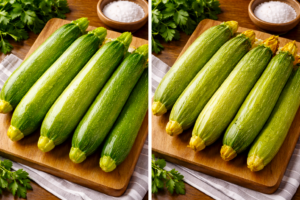
Four checks that take ten seconds at the store or in the garden:
- Firmness under pressure. Press near the stem end. A fresh zucchini is firm throughout. Soft spots mean moisture loss or internal breakdown has begun.
- Skin condition. Bright, slightly glossy skin = fresh. Dull, wrinkled, or puckered skin = dehydrating since harvest. The comparison image above shows exactly what to look for.
- Weight relative to size. Pick up two similar-sized zucchinis. The denser one has retained more moisture. It will cook better.
- The blossom end. The end opposite the stem deteriorates first. Any mushiness there is a reliable sign of age, regardless of how the rest looks.
Why Zucchini Goes Watery in the Pan — And How to Fix It
High moisture content is why zucchini so often disappoints in the pan: it releases liquid faster than the heat can evaporate it, turning what should be a sauté into an accidental steam bath. The result is soft, pale, flavorless zucchini.
Three fixes that actually work:
- Salt and drain first. Slice, salt generously, leave in a colander for 15–20 minutes. salt pulls out moisture through osmosis. Pat thoroughly dry before cooking.
- Small batches, very high heat. Crowding the pan drops the surface temperature and creates steam. Single layer, space between pieces, pan already hot enough to make the oil shimmer.
- Grill or broil instead of sauté. High, dry, direct heat evaporates surface moisture almost instantly and triggers browning — the Maillard reaction that makes grilled zucchini taste so much better than pan-cooked. If zucchini has been disappointing you, this is almost certainly why.
For zucchini bread: press grated zucchini firmly in a clean kitchen towel before adding to batter. Liquid you squeeze out is what would otherwise make the bread dense and underbaked in the center.
One-Minute Zucchini Sap Reference
- Clear sap, no off smell, tastes mild: Cook it.
- Very little sap, dull skin: Use it today.
- Sour or fermented smell: Discard.
- Homegrown + thick white sap: Taste test first.
- Any zucchini that tastes strongly bitter raw: Discard. Do not cook it.
That sticky white sap isn’t random. It’s the vegetable’s moisture, chemistry, and freshness — visible, readable, and useful, once you know what you’re looking at. Most of the time it’s telling you everything is fine. Occasionally — very occasionally, and almost always in a home garden — it’s one piece of a warning you shouldn’t ignore.
You noticed the sap. You looked it up. That’s already more than most people do.