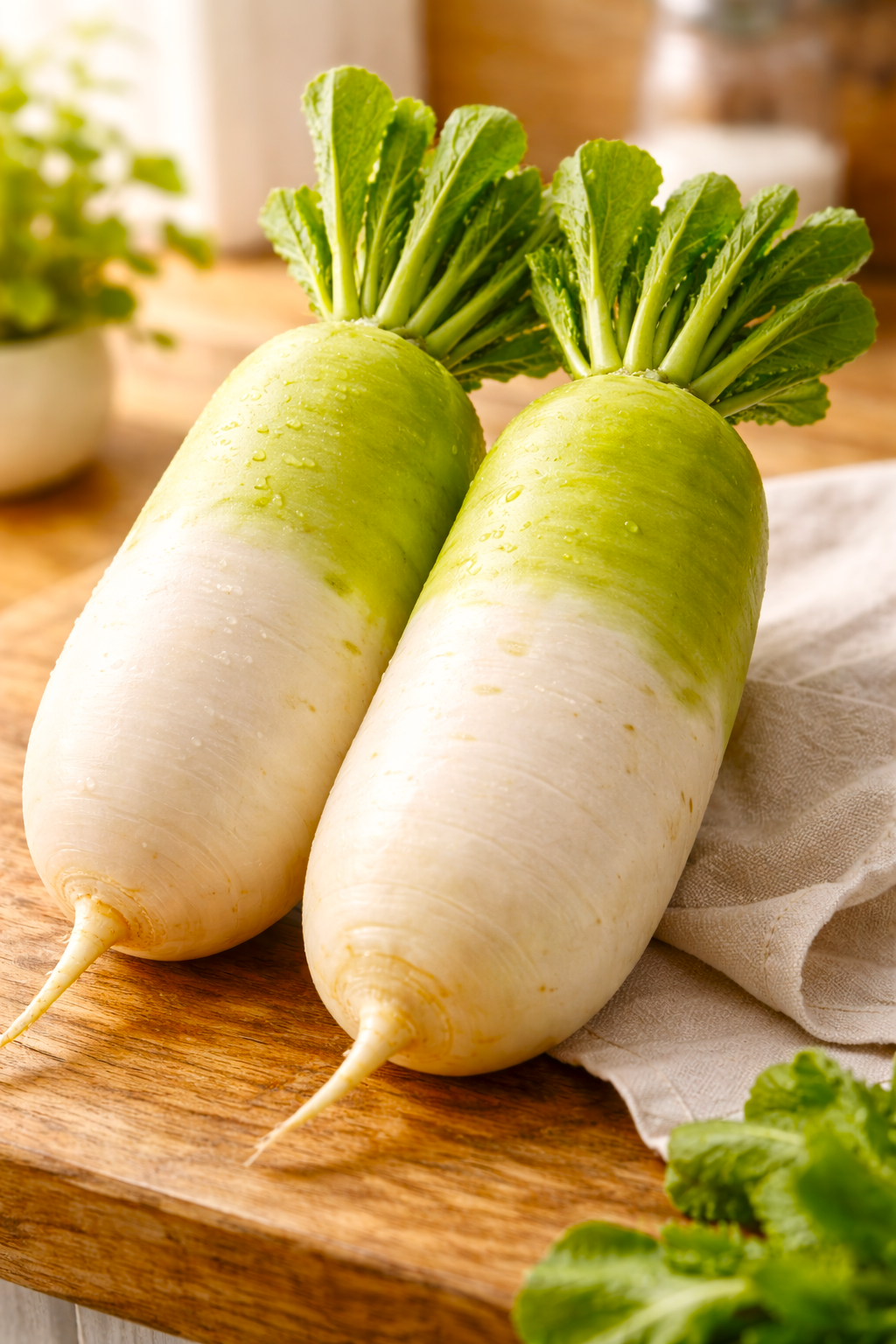
There are two completely different vegetables hiding under the name “Korean winter radish”— and most people have only ever eaten the inferior one.
Not because they made a bad choice. Because nobody told them that radish harvested in summer and radish harvested in winter are chemically, texturally, and culinarily different ingredients. Korean cooks have built an entire culinary tradition around this distinction. Western cooking largely ignores it.
Here’s what actually happens to radish when the temperature drops — and why it changes everything about how you should buy, cook, and eat it.
What Cold Weather Does to Korean Winter Radish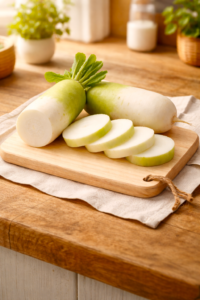
When soil temperatures drop, radish triggers a survival response. To protect its cells from freezing damage, the plant begins converting stored starches into simple sugars — a process called cold-induced sweetening. The same mechanism makes carrots sweeter after frost and turns Brussels sprouts from bitter to nutty in late autumn.
In Korean radish, cold-induced sweetening produces a measurable and dramatic change in flavor. The sharp, pungent compounds that make warm-season radish aggressive and one-dimensional are suppressed. In their place, the vegetable develops a clean, mild sweetness with genuine depth — the kind of flavor that can anchor a broth, absorb a braising liquid, or stand alone as a side dish.
This is not subtle. Taste a piece of peak-season winter radish raw and then taste summer radish raw. They are not the same ingredient.
Summer Radish vs Winter Radish: The Real Difference
Side by side, here’s what you’re actually comparing:
Summer radish grows fast in warm soil. The heat accelerates growth but limits sugar development. The result is a radish that is sharper, more pungent, more watery, and less complex. It works in quick pickles and raw preparations where that bite is useful. It struggles in long-cooked dishes where radish is expected to sweeten and mellow.
Winter radish grows slowly in cold soil. The cold slows everything down and redirects the plant’s energy toward sugar production. The result is denser, sweeter, more flavorful, and better at absorbing cooking liquids. It holds its shape in soups and braises without turning mushy. It develops a caramelized depth when cooked in soy-based sauces that summer radish simply cannot replicate.
Korean cuisine is built around winter radish. The soups, the braises, the kimchi, the banchan — all of it assumes you’re working with a vegetable that has gone through cold-induced sweetening. When Korean recipes feel flat or one-dimensional in Western kitchens, this is often why. The radish is wrong for the season.
When to Buy It — And When to Skip It
Peak season for Korean winter radish runs from October through February, with November and December considered optimal by most Korean cooks. This is when cold-induced sweetening has had the most time to develop and the radish is at its densest and most flavorful.
Radish purchased in June or July has been growing through warm summer months. It will be sharper, more bitter, and less suitable for the slow-cooked dishes where Korean radish really performs. You can use it — but you’ll get a noticeably different result, and you’ll need to compensate with more seasoning and longer cooking times.
The simplest test: taste a small piece raw before cooking. Sweet and mild with minimal sharpness means peak-season quality. Sharp, pungent, almost medicinal means summer radish — adjust your expectations and your seasoning accordingly.
How to Pick the Best Korean Winter Radish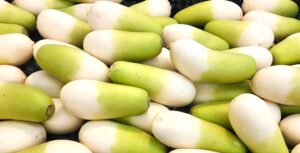
At the store or market, four things separate a good radish from a mediocre one:
- Weight first. A good radish feels heavy for its size. Pick up two similar-sized radishes and choose the denser one. A lightweight radish has lost moisture and will be pithy and dry inside — no amount of cooking fixes that.
- Smooth, firm skin. No soft spots, no cracks, no wrinkled patches. The pale green-white color should look fresh and slightly glossy. Dull or puckered skin means it’s been sitting too long.
- Check the leaf end. If the radish still has its leafy top, the leaves tell you more than the root does. Fresh, upright green leaves mean the radish was recently harvested. Yellow, wilted leaves mean it’s been in storage.
- Taste it raw. This is the most reliable test and the one most people skip. A small piece of raw radish tells you immediately whether you have winter quality or summer quality — and whether the dish you’re planning will work.
Why Korean Cooking Uses Radish So Differently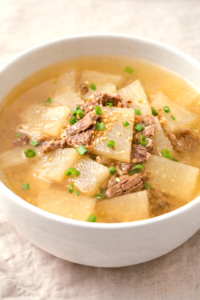
In most Western cuisines, radish is an afterthought. A garnish. Something thin-sliced onto a salad for a flash of color and a bite of sharpness. It’s treated as a one-note ingredient — sharp, crunchy, raw.
Korean cooking arrived at a completely different understanding over centuries of working with this vegetable: radish doesn’t have one flavor, it has many, and they depend entirely on how you apply heat.
Raw winter radish is mild, sweet, and clean — good in quick pickles and raw salads where its crunch and freshness contrast rich dishes. Apply gentle heat and it softens into something silky and sweet-savory, pulling flavor from whatever liquid surrounds it. Apply long, slow heat in a reduced sauce and it develops a deep, almost caramelized richness that tastes nothing like the raw vegetable you started with.
Korean cuisine deliberately moves radish through all three states:
- Kkakdugi — cubed radish kimchi, fermented raw, bright and crunchy with lactic acid tang
- Muguk — radish soup, where thin slices cook in anchovy broth until silky and sweet
- Mu jorim — braised radish, where cubes absorb soy sauce and reduce to a glossy, caramelized side dish
- Mu saengchae — raw radish salad, julienned and dressed with sesame oil and a touch of vinegar
The same vegetable. Four completely different flavor profiles. All of them only work at their best with winter radish that has gone through cold-induced sweetening.
Korean Braised Radish Recipe (Mu Jorim) — The Best Introduction to Winter Radish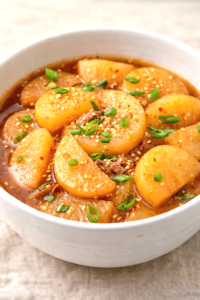
Mu jorim is the dish that converts people. If you’ve never understood why Korean cooks treat radish as a serious ingredient, this is where that changes. The radish cubes absorb the braising liquid completely over 20 minutes of cooking, turning glossy, sweet, and deeply savory — nothing like the sharp vegetable you started with.
It pairs with rice and grilled meat, keeps well in the refrigerator for several days, and gets better the next day as the flavors continue to develop.
Ingredients (serves 4 as a side dish):
- 500g Korean radish or daikon, peeled and cut into 3cm cubes
- 2 tbsp soy sauce
- 1 tbsp sugar
- 1 tbsp minced garlic
- 1 tsp gochugaru (Korean red pepper flakes) — optional, adds mild heat and color
- 1 cup water
- 1 tsp sesame oil
- Sesame seeds to finish
Instructions:
- Arrange radish cubes in a single layer in a wide pan. Add water, soy sauce, sugar, and garlic.
- Bring to a boil over medium-high heat, then reduce to a steady simmer.
- Cook uncovered for 15–20 minutes, turning radish occasionally as the liquid reduces.
- When the liquid has reduced to a thick glaze and the radish looks glossy, remove from heat.
- Finish with sesame oil and sesame seeds. Serve warm with rice.
One note on timing: peak-season winter radish will be tender and fully glazed within 15–20 minutes. Summer radish takes longer and absorbs less. If the radish isn’t tender after 20 minutes, add a splash of water and continue cooking — don’t rush the reduction by raising the heat, or the glaze will burn before the radish finishes.
Health Benefits Worth Knowing
Korean radish earns its place in the diet on nutritional grounds too — not as a superfood, but as a quietly useful vegetable that does several things well.
It contains digestive enzymes — diastase and amylase — that help break down starches after heavy meals. This is why radish appears so consistently alongside rich Korean dishes like braised short ribs and grilled pork belly. Traditional Korean food pairings are often more deliberate than they look.
At roughly 18–20 calories per 100g, it’s one of the lowest-calorie vegetables you can cook with — adding bulk and flavor to soups and stews without meaningfully affecting caloric load. It provides around 22mg of vitamin C per 100g, meaningful potassium that helps balance the high sodium typical of Korean cuisine, and fiber that supports gut health alongside the digestive enzymes.
None of this is remarkable in isolation. Together, it’s a vegetable that belongs in weekly cooking — not as a health strategy, but because it’s genuinely useful and, in winter, genuinely delicious.
Storing Korean Radish
A whole, uncut radish keeps well in the refrigerator for two to three weeks. Wrap it loosely in a damp paper towel or store in a sealed bag to slow moisture loss.
Once cut, use within three to five days. The cut surface develops a mildly bitter edge after a few days — normal, not spoilage, but it will affect raw preparations more than cooked ones.
Final Thoughts
Most people who think they don’t like radish have never eaten it in the right season. The sharp, pungent, aggressively one-dimensional radish they remember is summer radish — a different ingredient in a different chemical state.
Winter radish, grown slowly in cold soil and harvested after the first frosts have done their work, is something else entirely. Korean cooking has always known this. The question is whether your kitchen does too.
Buy it in November. Cook it low and slow. Taste the difference.