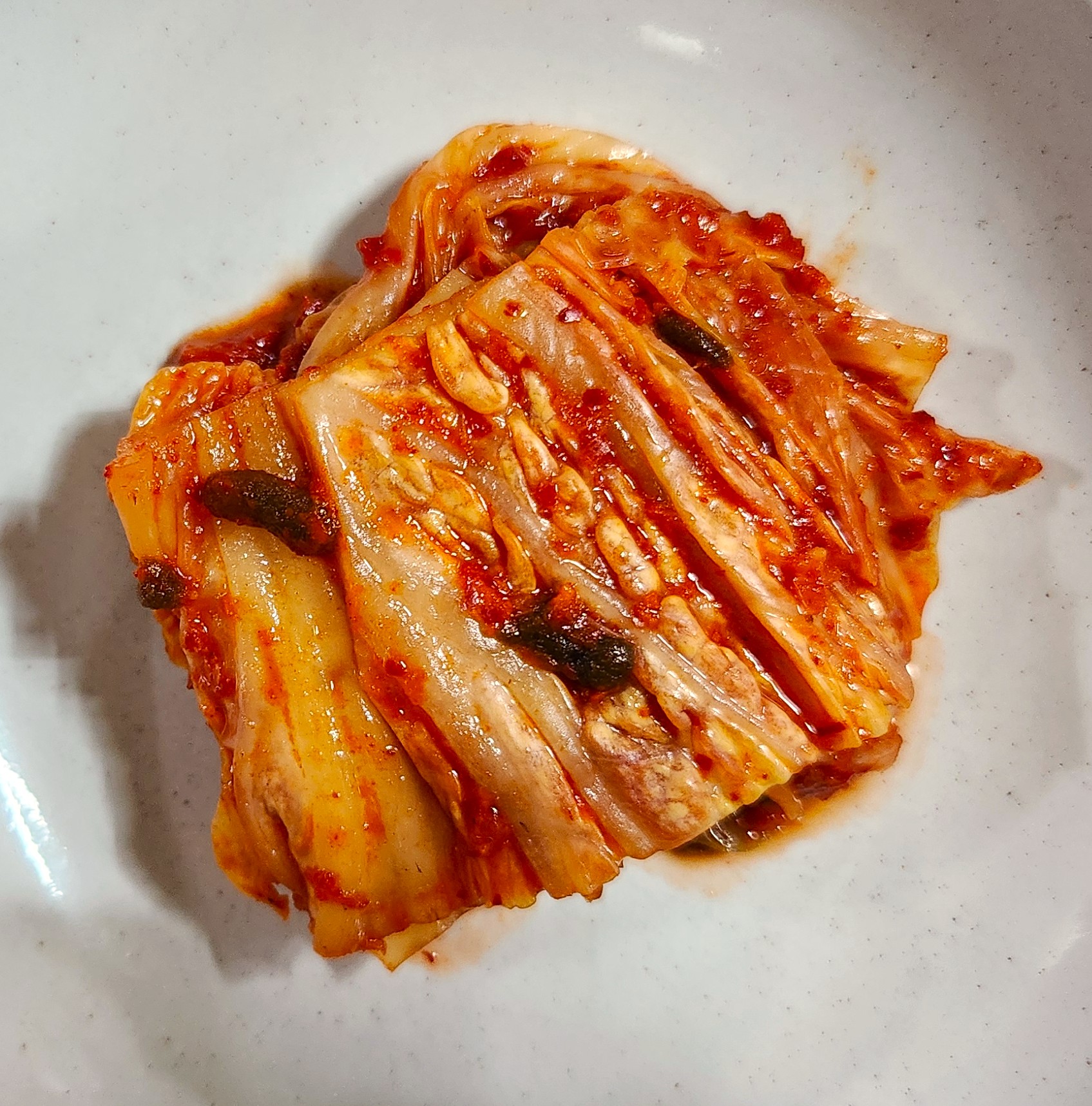
You’ve probably seen the kimchi weight loss headlines. “Korean women eat kimchi every day and never get fat.” “K-pop stars swear by kimchi for their figures.” “The fermented superfood that melts belly fat.”
Most of that is marketing. But the kimchi weight loss research buried underneath the exaggeration is something real — and the actual mechanism is more interesting than any headline version of it.
Kimchi doesn’t burn fat. It doesn’t suppress appetite the way diet pills claim to. But what daily kimchi consumption does to your gut, your hunger hormones, and your insulin response over eight to twelve weeks of consistent eating is backed by clinical research that most weight loss content completely ignores.
Here’s what’s actually happening — and what you need to know before you buy a jar expecting a transformation.
Why Kimchi Weight Loss Claims Are Mostly Wrong
Let’s start with what kimchi won’t do, because the wellness industry has been particularly creative about this one.
Kimchi is not a significant source of weight loss on its own. A typical serving is 15–30 calories. Eating more of it won’t burn more fat. The capsaicin in gochugaru has a marginally documented thermogenic effect, but the quantities in a normal kimchi serving are too small to produce meaningful caloric burn. Any article telling you that kimchi “boosts metabolism” by a meaningful amount is not reading the research carefully.
Kimchi also won’t override a poor diet. The studies showing positive outcomes all involve participants eating kimchi as part of a reasonably balanced diet — not as a corrective to daily fast food. Food doesn’t work that way, and kimchi is no exception.
So why does the research consistently show that regular kimchi eaters manage their weight better than non-consumers — even after controlling for total caloric intake and exercise?
The Part That’s Actually True
The most important kimchi and weight loss study most people haven’t read was published in Nutrition Research. Researchers took overweight participants and split them into two groups: one eating fresh kimchi daily, one eating fermented kimchi daily. Same vegetables. Same ingredients. Same quantities. The only difference was whether the kimchi had been fermented.
After four weeks, the fermented kimchi group showed significantly greater reductions in body weight, BMI, waist circumference, and fasting blood glucose. The fresh kimchi group improved too — but meaningfully less.
The difference was fermentation. Not cabbage. Not garlic. The live bacteria and their metabolic byproducts — produced during the fermentation process — were doing something that the raw vegetables alone couldn’t.
A 2021 study in Nutrients followed 100 participants for eight weeks. Daily kimchi consumption produced significant reductions in body fat percentage and improvements in insulin sensitivity. Participants weren’t asked to change their diet or exercise habits. Kimchi was the only variable.
This is a real effect. It’s just not the effect the headlines describe.
What’s Actually Happening in Your Gut
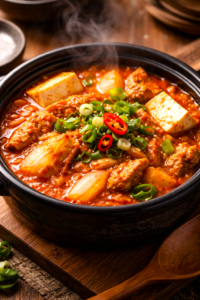
The gut microbiome — the trillions of bacteria living in your digestive system — directly influences how your body processes food, regulates hunger, and stores fat. People with obesity consistently show lower gut bacterial diversity and fewer bacteria from the Lactobacillus family than lean individuals.
Kimchi fermentation produces Lactobacillus bacteria in abundance. When you eat fermented kimchi regularly, you’re introducing live Lactobacillus into your gut alongside the prebiotic fiber from cabbage that feeds those bacteria once they arrive. Over weeks and months of daily consumption, this produces a measurable shift toward a gut microbiome profile associated with better metabolic health.
It’s not fast. One serving doesn’t move the needle. But eight to twelve weeks of consistent daily eating produces the kind of microbiome changes that show up in body composition data.
This is why the fermented group outperformed the fresh group in every study. Raw cabbage gives you fiber. Fermented kimchi gives you fiber plus live bacteria plus their metabolic byproducts — a meaningfully different package.
The Hunger Hormone Connection Nobody Talks About
Here’s the part that connects kimchi to one of the biggest topics in health right now.
Fermented foods stimulate the production of GLP-1 — glucagon-like peptide-1 — a gut hormone that signals fullness to the brain and slows gastric emptying. GLP-1 is the same hormone that Ozempic and Wegovy mimic synthetically. Those drugs work by flooding GLP-1 receptors with a pharmaceutical-grade signal that makes people feel full and eat less.
Kimchi produces a version of this effect naturally — at much lower intensity, through the fermentation acids and fiber it contains. The result isn’t dramatic. But people who eat kimchi with or before a meal tend to eat slightly less during that meal, not because they’re restricting themselves, but because the satiety signal arrives a little earlier.
Modest in any single meal. Compounded over months of daily eating, it represents a meaningful reduction in total caloric intake without intentional restriction.
This is also why kimchi eaten with carbohydrates flattens blood sugar spikes. The fiber and fermentation acids slow gastric emptying — the same mechanism — which means glucose enters the bloodstream more gradually. Lower spikes mean lower crashes, and lower crashes mean fewer hunger signals between meals.
The Catch: Most Kimchi You Can Buy Doesn’t Work This Way

This is the part most kimchi articles skip entirely, and it matters more than anything else in this piece.
Most kimchi sold in mainstream Western supermarkets is pasteurized. It’s been heat-treated to extend shelf life and make it shelf-stable. That heat treatment kills the live bacteria — the exact bacteria responsible for most of the metabolic effects described above.
Pasteurized kimchi tastes similar to the real thing. It has similar fiber content. But it’s missing the live cultures that shift the gut microbiome, stimulate GLP-1 production, and produce the short-chain fatty acids that improve insulin sensitivity. You’re getting the flavor without the function.
If you’re eating kimchi for weight management, you need unpasteurized kimchi with live cultures — sold refrigerated, usually at Korean grocery stores, some Asian supermarkets, or specialty health food stores. Check the label. If it says “pasteurized” or doesn’t specify “live cultures,” the bacteria are gone.
How to Actually Use Kimchi for Weight Management
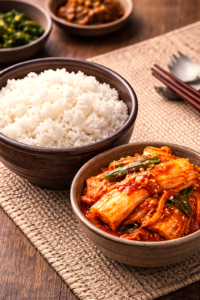
The research points to a few specific patterns that produce the best outcomes:
- Daily beats occasional. Eating a small amount every day is more effective than eating a large amount three times a week. The gut microbiome responds to consistency. Two to three tablespoons daily — roughly half a cup — is enough to produce meaningful effects over eight to twelve weeks.
- Eat it with carbohydrate-heavy meals. The fiber and fermentation acids in kimchi blunt the blood sugar response to whatever you eat alongside it. Rice, bread, pasta, potatoes — all produce lower post-meal glucose peaks when eaten with kimchi than when eaten alone.
- Make it a condiment, not a commitment. You don’t need a large serving or a dedicated side dish. Adding kimchi to eggs, grain bowls, sandwiches, or tacos as a condiment makes daily consumption easy without restructuring your eating.
- Give it three months. The studies showing meaningful body composition changes run eight to twelve weeks minimum. If you try kimchi for two weeks and notice nothing, that’s expected. The effect is cumulative.
The Honest Answer to “Does Kimchi Help With Weight Loss?”
Yes — but not in the way anyone is selling it.
Kimchi doesn’t burn fat or suppress appetite dramatically. What it does, consumed daily over months, is shift your gut microbiome toward a profile associated with better metabolic health, improve insulin sensitivity, stimulate satiety hormones modestly, and slow gastric emptying enough to flatten blood sugar peaks and reduce between-meal hunger.
None of those effects are dramatic in isolation. Together, over time, they create a metabolic environment where maintaining a healthy weight becomes easier — not through restriction, but through better underlying function.
Korea has one of the lowest obesity rates among developed nations. Daily fermented vegetable consumption, as part of a structured meal pattern, is almost certainly part of that story. The headlines oversell it. The dismissals undersell it. The truth is somewhere in between — and it’s more useful than either.
Related Guides
- The Real Reason Korean Meals Don’t Spike Your Blood Sugar
- Raw vs Cooked Cabbage: Which Is Actually Better for You?
- Eating One Handful of Cabbage a Day: A Simple Habit for Better Health
- Cabbage Juice Benefits: Does It Really Help Your Stomach?
- Korean Winter Radish: Why Cold Weather Makes It Taste Completely Different