
Every spring, millions of people reach for antihistamines the moment their eyes start itching and their nose begins to run. But before you head to the pharmacy, it is worth knowing that what you eat can make a significant difference to how your immune system responds to allergens.
This guide covers the most well-researched foods that help with allergies — backed by science, not trends — along with practical tips on how to include them in your daily diet.
Why Do Allergies Happen?
Allergies occur when the immune system misidentifies a harmless substance — such as pollen, dust, or pet dander — as a threat. In response, it releases a chemical called histamine, which triggers the familiar symptoms: sneezing, itching, runny nose, and watery eyes.
What many people do not realise is that the severity of this reaction is closely linked to the state of your immune system — and your immune system is heavily influenced by your gut health, your diet, and your levels of inflammation.
This is why certain foods can genuinely help reduce allergy symptoms: they work by calming inflammation, supporting gut health, and modulating the immune response rather than simply blocking histamine after the fact.
1. Ginger — Nature’s Anti-Inflammatory
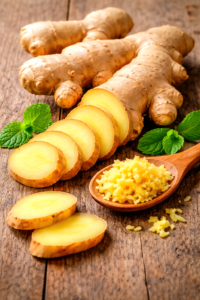
Ginger has been used medicinally for thousands of years, and modern research confirms what traditional medicine long suspected: it is one of the most powerful natural anti-inflammatory foods available.
The active compounds in ginger — particularly gingerols and shogaols — have been shown to suppress the production of pro-inflammatory cytokines, the signalling molecules that drive allergic reactions. A 2016 study published in the Journal of Nutritional Biochemistry found that ginger extract significantly reduced airway inflammation in subjects with allergic asthma.
Ginger also inhibits the enzyme that produces prostaglandins — inflammatory molecules involved in allergy symptoms — making it a natural alternative to some over-the-counter anti-inflammatory medications.
How to use it
- Drink 30–60 minutes before meals as fresh ginger tea (slice 3–4 pieces, steep in hot water for 10 minutes)
- Add grated ginger to stir-fries, soups, and smoothies
- Combine with turmeric and honey for a potent anti-allergy tonic
2. Turmeric — The Curcumin Connection
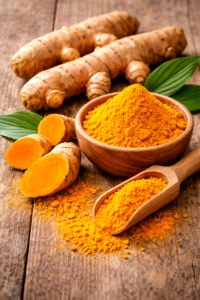
Turmeric’s active compound, curcumin, is one of the most extensively studied anti-inflammatory substances in nutritional science. Its relevance to allergy management is particularly well-documented.
Research shows that curcumin works against allergies through multiple pathways. It inhibits the release of histamine from mast cells — the immune cells responsible for triggering allergy symptoms. It also reduces the activity of immunoglobulin E (IgE), the antibody that the immune system produces in response to allergens.
A clinical trial published in Annals of Allergy, Asthma & Immunology found that participants taking curcumin supplements for two months experienced significant reductions in nasal symptoms during allergy season compared to the placebo group.
💡 Important note: Curcumin is poorly absorbed on its own. Always combine turmeric with black pepper (piperine), which increases absorption by up to 2,000%, or consume it with a source of healthy fat.
How to use it
- Add to golden milk: warm plant-based milk with turmeric, black pepper, and a small amount of honey
- Use in curries, soups, and rice dishes
- Take as a supplement (400–600mg of curcumin extract, standardised to 95% curcuminoids)
3. Quercetin Foods — Apples and Onions
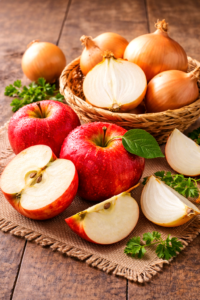
Quercetin is a naturally occurring flavonoid found in high concentrations in apples, onions, capers, and berries. It is often called a “natural antihistamine” — and for good reason.
Unlike pharmaceutical antihistamines, which block histamine receptors after histamine has already been released, quercetin works upstream: it stabilises mast cells and prevents them from releasing histamine in the first place. Studies have shown it can also inhibit the release of other inflammatory mediators, including leukotrienes and prostaglandins.
A 2007 study in the Journal of Agricultural and Food Chemistry found that quercetin was more effective at inhibiting histamine release than the antihistamine drug cromolyn sodium in isolated cell studies.
Best quercetin food sources
- Apples (with skin) — approximately 4.4mg per 100g
- Red onions — approximately 33mg per 100g (highest of all vegetables)
- Capers — the richest food source at approximately 234mg per 100g
- Blueberries — approximately 7.7mg per 100g
- Kale — approximately 22mg per 100g
💡 Practical tip: Eat an apple with the skin on every day and add raw red onion to your salads. These two simple habits can meaningfully increase your quercetin intake without any supplements.
4. Salmon and Omega-3 Fatty Acids
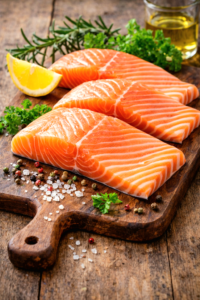
Omega-3 fatty acids — found in abundance in fatty fish like salmon, mackerel, and sardines — are among the most evidence-backed anti-inflammatory nutrients available through diet.
The two key omega-3s, EPA and DHA, reduce the production of inflammatory prostaglandins and leukotrienes — the same compounds that drive allergy symptoms. They also help shift the immune system’s balance away from the Th2-dominant response that characterises allergic conditions.
A large 2005 study published in Allergy found that children who ate fish regularly had a significantly lower risk of developing allergic rhinitis compared to those who ate little or no fish. Similar findings have been replicated in adult populations.
How much you need
- Aim for 2–3 servings of fatty fish per week (salmon, mackerel, sardines, herring)
- One 100g serving of salmon provides approximately 2.2g of combined EPA and DHA
- If you do not eat fish, consider an algae-based omega-3 supplement (1,000–2,000mg daily)
5. Fermented Foods and Gut Health
The gut is home to approximately 70% of the immune system. An imbalance in gut bacteria — known as dysbiosis — has been closely linked to increased allergy severity. This is why fermented foods, which introduce beneficial bacteria into the gut, are increasingly recognised as an important tool for allergy management.
Probiotic strains, particularly Lactobacillus and Bifidobacterium species, have been shown in multiple clinical trials to reduce the severity of seasonal allergy symptoms. They appear to work by promoting a more balanced immune response and reducing the overactive Th2 signalling that drives allergic reactions.
Best fermented foods for allergy support
- Plain yogurt — choose varieties with live and active cultures
- Kefir — contains a wider diversity of probiotic strains than yogurt
- Kimchi and sauerkraut — fermented vegetables rich in Lactobacillus
- Miso — a fermented soy paste excellent as a soup base
💡 Note on cheese: Aged cheeses like cheddar and parmesan contain small amounts of histamine and may worsen symptoms in histamine-sensitive individuals. Stick to fresh cheeses like ricotta or cottage cheese if you are particularly sensitive.
6. Local Honey — The Traditional Remedy
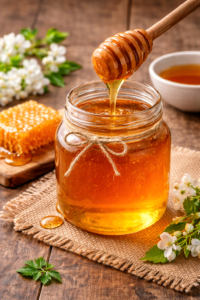
Local honey has long been recommended as a folk remedy for seasonal allergies, and while the clinical evidence is limited, there is a plausible mechanism behind it: local honey contains trace amounts of local pollen, which may help the immune system gradually build tolerance — a process similar to allergen immunotherapy.
A small 2011 study published in the International Archives of Allergy and Immunology found that participants who consumed birch pollen honey before allergy season experienced 60% fewer allergy days and used antihistamines 50% less than the control group.
While this research is preliminary, honey has additional benefits: it contains antioxidants and has been shown to have mild anti-inflammatory properties of its own.
How to use it
- Take 1–2 teaspoons of raw local honey daily, ideally starting 4–6 weeks before allergy season
- Add to ginger or turmeric tea for a combined anti-allergy effect
- Choose raw, unfiltered honey from a local producer for maximum pollen content
Foods to Avoid During Allergy Season
Just as some foods can calm the immune response, others can amplify it. During peak allergy season, it is worth limiting:
- High-histamine foods — aged cheeses, processed meats, alcohol (especially red wine and beer), fermented sauces, and canned fish can raise histamine levels and worsen symptoms
- Refined sugar — promotes inflammation and may exacerbate immune overreaction
- Cross-reactive foods — if you are allergic to birch pollen, foods like apples, celery, peaches, and hazelnuts may trigger oral allergy syndrome in some individuals
- Alcohol — inhibits the enzyme that breaks down histamine (diamine oxidase), making symptoms worse
A Simple Anti-Allergy Daily Routine
You do not need to overhaul your entire diet to see benefits. These small, consistent habits can make a meaningful difference:
- ✅ Start the day with ginger tea on an empty stomach (30–60 minutes before breakfast)
- ✅ Add turmeric and black pepper to at least one meal daily
- ✅ Eat an apple with the skin on and include red onion in your lunch or dinner
- ✅ Have a serving of fatty fish (salmon, mackerel, sardines) 2–3 times per week
- ✅ Include a fermented food daily — yogurt, kefir, or kimchi
- ✅ Take 1 teaspoon of raw local honey each morning, starting before allergy season begins
Frequently Asked Questions
Can food really help with allergies?
Yes — while food cannot cure allergies, certain foods contain compounds that reduce inflammation, stabilise mast cells, and support a balanced immune response. The effect is gradual and works best as a consistent dietary habit rather than a short-term fix.
What is the best natural antihistamine food?
Quercetin-rich foods — particularly red onions, apples, and capers — are the most evidence-backed natural alternatives to antihistamines. Ginger and turmeric also have strong anti-inflammatory and anti-allergic effects.
How long does it take for dietary changes to affect allergies?
Most studies show benefits after 4–8 weeks of consistent dietary changes. For seasonal allergies, it is best to start adjusting your diet 4–6 weeks before your typical allergy season begins.
Should I take supplements instead of eating these foods?
Whole foods are generally preferable because they provide additional nutrients, fibre, and cofactors that support absorption. However, quercetin and curcumin supplements can be useful when dietary intake is insufficient — particularly during peak allergy season.
Final Thoughts
Managing allergies does not have to mean relying entirely on medication. By consistently including anti-inflammatory, quercetin-rich, and probiotic foods in your diet — and reducing your intake of high-histamine and inflammatory foods — you can meaningfully reduce the severity of your symptoms over time.
The key is consistency. Start with one or two changes — a daily cup of ginger tea, or salmon twice a week — and build from there. Your immune system responds to cumulative dietary patterns, not single meals.
Start before allergy season begins, and give your body the nutritional support it needs.
👉 Want more science-backed nutrition guides? Learn about Resistant Starch and how it supports gut health, or discover the right daily protein intake for your goals.