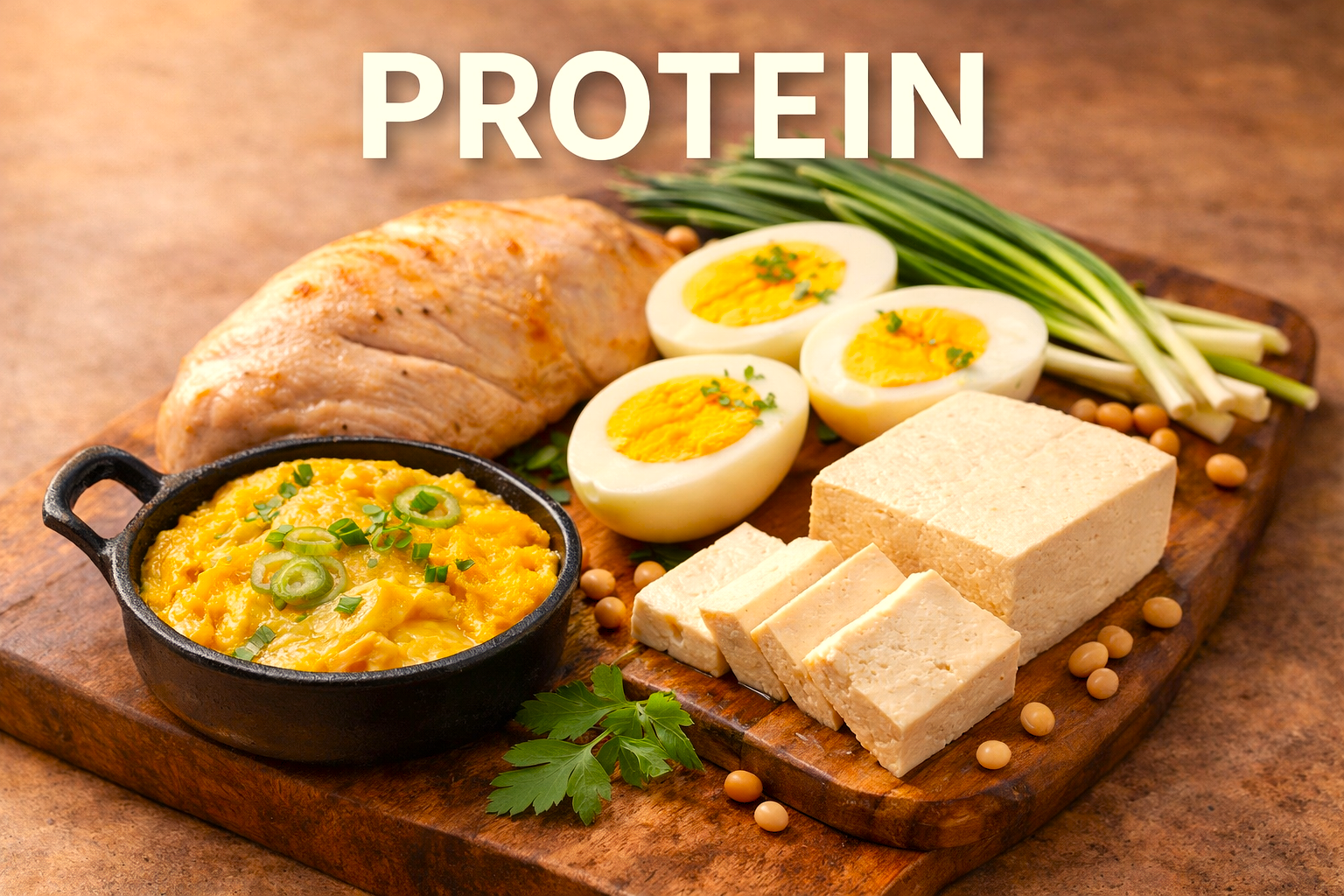
How much protein per day do you actually need? Whether you are trying to lose weight, build muscle, or simply eat healthier, this is one of the most common nutrition questions — and one of the most misunderstood.
Most people either eat too little protein without realising it, or obsess over hitting an unnecessarily high number. The truth is, your ideal daily protein intake depends on your body weight, your age, and your specific goal.
In this guide, you will get a clear, science-backed answer — including a simple formula you can use today, a breakdown by goal, and a practical food guide so you know exactly what hitting your target actually looks like on a plate.
What You Will Learn
- Why protein matters for weight loss, muscle, and metabolism
- The simple formula for calculating your daily protein intake
- Recommended intake by goal (general health, weight loss, muscle gain)
- How much protein is in common foods
- The best times to eat protein
- Common mistakes to avoid
- FAQ
Why Protein Matters More Than Most People Think
Protein is one of the three macronutrients (alongside carbohydrates and fat), but it plays a uniquely important role in the body that goes far beyond just building muscle.
Here is what adequate daily protein intake actually does:
- Builds and repairs muscle tissue — essential for anyone exercising, recovering from injury, or ageing.
- Keeps you fuller for longer — protein is the most satiating macronutrient. Studies show high-protein diets reduce overall calorie intake by reducing hunger hormones like ghrelin.
- Boosts metabolism — the body burns more calories digesting protein than carbs or fat. This is called the thermic effect of food (TEF), and protein’s TEF is 20–30% vs. 5–10% for carbs.
- Preserves muscle during weight loss — when you cut calories, adequate protein prevents your body from breaking down muscle for energy.
- Supports immune function — antibodies and immune cells are made from protein.
💡 Key insight: A 2012 meta-analysis in the American Journal of Clinical Nutrition found that higher protein diets produced significantly greater fat loss and muscle preservation compared to standard protein diets — even when total calories were the same.
The Simple Formula for Daily Protein Intake
The most widely used and research-supported formula for daily protein intake is based on body weight:
Protein (g) = Body weight (kg) × multiplier
| Goal | Protein per kg | Example (70kg person) |
|---|---|---|
| General health / sedentary | 0.8 – 1.0 g/kg | 56 – 70g per day |
| Active lifestyle / light exercise | 1.2 – 1.4 g/kg | 84 – 98g per day |
| Weight loss (preserving muscle) | 1.5 – 2.0 g/kg | 105 – 140g per day |
| Muscle gain / strength training | 1.6 – 2.2 g/kg | 112 – 154g per day |
| Older adults (60+) | 1.2 – 1.6 g/kg | 84 – 112g per day |
The 0.8g/kg figure is the minimum recommended by the World Health Organization to prevent deficiency. Most nutrition researchers now suggest that 1.2–1.6g/kg is optimal for most active adults — not just athletes.
Quick Calculator (No Math Needed)
- Normal lifestyle → body weight (kg) × 1
- Trying to lose weight → body weight (kg) × 1.5
- Building muscle → body weight (kg) × 2
For example, a 65kg person trying to lose weight should aim for approximately 97g of protein per day.
How Much Protein Is in Common Foods?

Knowing your target is one thing — knowing how to hit it with real food is another. Here is a practical guide to protein content in common foods:
| Food | Serving Size | Protein Content |
|---|---|---|
| Chicken breast (cooked) | 100g | ~31g |
| Tuna (canned in water) | 100g | ~25g |
| Salmon (cooked) | 100g | ~25g |
| Eggs | 1 large egg | ~6g |
| Greek yogurt (plain) | 170g | ~17g |
| Cottage cheese | 100g | ~11g |
| Tofu (firm) | 100g | ~8g |
| Lentils (cooked) | 100g | ~9g |
| Chickpeas (cooked) | 100g | ~9g |
| Edamame | 100g | ~11g |
| Milk (whole) | 240ml | ~8g |
| Almonds | 30g (small handful) | ~6g |
💡 Practical example: A 65kg person targeting 97g of protein per day could eat: 2 eggs at breakfast (12g) + Greek yogurt as a snack (17g) + 150g chicken breast at lunch (46g) + 100g tofu at dinner (8g) + a handful of almonds (6g) = 89g total. Add a glass of milk (8g) and the target is met.
The Best Times to Eat Protein

When you eat protein matters almost as much as how much you eat. Research suggests the following timing principles:
1. Spread Protein Across All Meals
The body can only use about 25–40g of protein per meal for muscle synthesis. Eating 100g in one meal does not mean your body uses all of it efficiently. Spreading intake across 3–4 meals is significantly more effective than front- or back-loading.
2. Eat Protein at Breakfast
Most people eat very little protein at breakfast (toast, cereal, fruit) and then try to compensate at dinner. Starting the day with 20–30g of protein reduces hunger throughout the day and prevents overeating later.
3. Protein After Exercise
Consuming 20–40g of protein within 2 hours of resistance training maximises muscle protein synthesis. This does not need to be a protein shake — a chicken breast, Greek yogurt, or eggs work just as well.
4. Protein Before Bed (Optional)
A small amount of slow-digesting protein (like cottage cheese or casein) before sleep has been shown to support overnight muscle recovery without significantly impacting fat loss.
Is Eating More Protein Always Better?
No. There is a point of diminishing returns with protein intake. Beyond approximately 2.2g/kg per day, additional protein does not produce additional muscle growth in most people and simply adds unnecessary calories.
Very high protein intakes (above 3g/kg) over long periods may also place extra stress on the kidneys — although this is primarily a concern for people with existing kidney conditions, not healthy adults.
The sweet spot for most people is 1.2–2.0g/kg, depending on activity level and goal.
Who Needs More Protein?
- People losing weight — higher protein preserves muscle mass during a calorie deficit, which keeps metabolism from slowing down.
- People doing resistance training — muscle repair requires additional protein above the baseline recommendation.
- Older adults (60+) — muscle loss (sarcopenia) accelerates with age. Higher protein intake combined with resistance exercise is the most effective strategy to slow this process.
- Pregnant or breastfeeding women — protein needs increase significantly to support foetal development and milk production.
- People recovering from illness or surgery — protein is essential for tissue repair and immune recovery.
Common Protein Mistakes to Avoid
- Eating all your protein in one meal — spread it across the day instead for better absorption and muscle synthesis.
- Skipping protein at breakfast — this leads to hunger and overeating later in the day.
- Relying only on protein shakes — whole food protein sources come with additional nutrients (vitamins, minerals, healthy fats) that shakes lack.
- Ignoring plant proteins — lentils, tofu, edamame, and chickpeas are excellent protein sources that also provide fiber and micronutrients.
- Not adjusting for body weight — a flat “eat 50g per day” recommendation ignores that a 50kg person and a 90kg person have very different needs.
Frequently Asked Questions
How much protein do I need per day to lose weight?
For weight loss, aim for 1.5–2.0g of protein per kg of body weight. Higher protein intake during a calorie deficit preserves muscle mass, keeps you fuller for longer, and boosts metabolism through the thermic effect of food.
Can I eat too much protein?
For healthy adults, intakes up to 2.2g/kg per day are considered safe and beneficial. Beyond this, additional protein adds calories without adding benefit. Very high intakes (3g/kg+) over long periods may stress the kidneys in people with existing kidney conditions.
What is the best source of protein?
Complete protein sources — those containing all essential amino acids — include chicken, fish, eggs, dairy, and soy. For plant-based diets, combining different protein sources (e.g. rice and beans) ensures you get a complete amino acid profile.
Do I need protein supplements?
No. Most people can meet their protein needs through whole foods. Protein supplements like whey are convenient but not necessary. If you struggle to hit your target through food alone, a supplement can help bridge the gap.
How much protein is in one egg?
One large egg contains approximately 6 grams of protein. Eggs are also a complete protein source, containing all essential amino acids, making them one of the most efficient and affordable protein sources available.
Final Thoughts
Getting your daily protein intake right is one of the highest-leverage nutritional habits you can build — whether your goal is weight loss, muscle gain, or simply better health.
The formula is simple: start with your body weight in kilograms, multiply by the appropriate factor for your goal, and work on spreading that protein across 3–4 meals throughout the day.
You do not need supplements, extreme diets, or complicated meal plans. Just consistent, protein-rich meals built around eggs, chicken, fish, dairy, legumes, and tofu.
Calculate your target today and start with breakfast.
👉 Want more practical nutrition guides? Check out Best Fruits for Blood Sugar Control or learn how Resistant Starch lets you eat carbs without gaining weight.