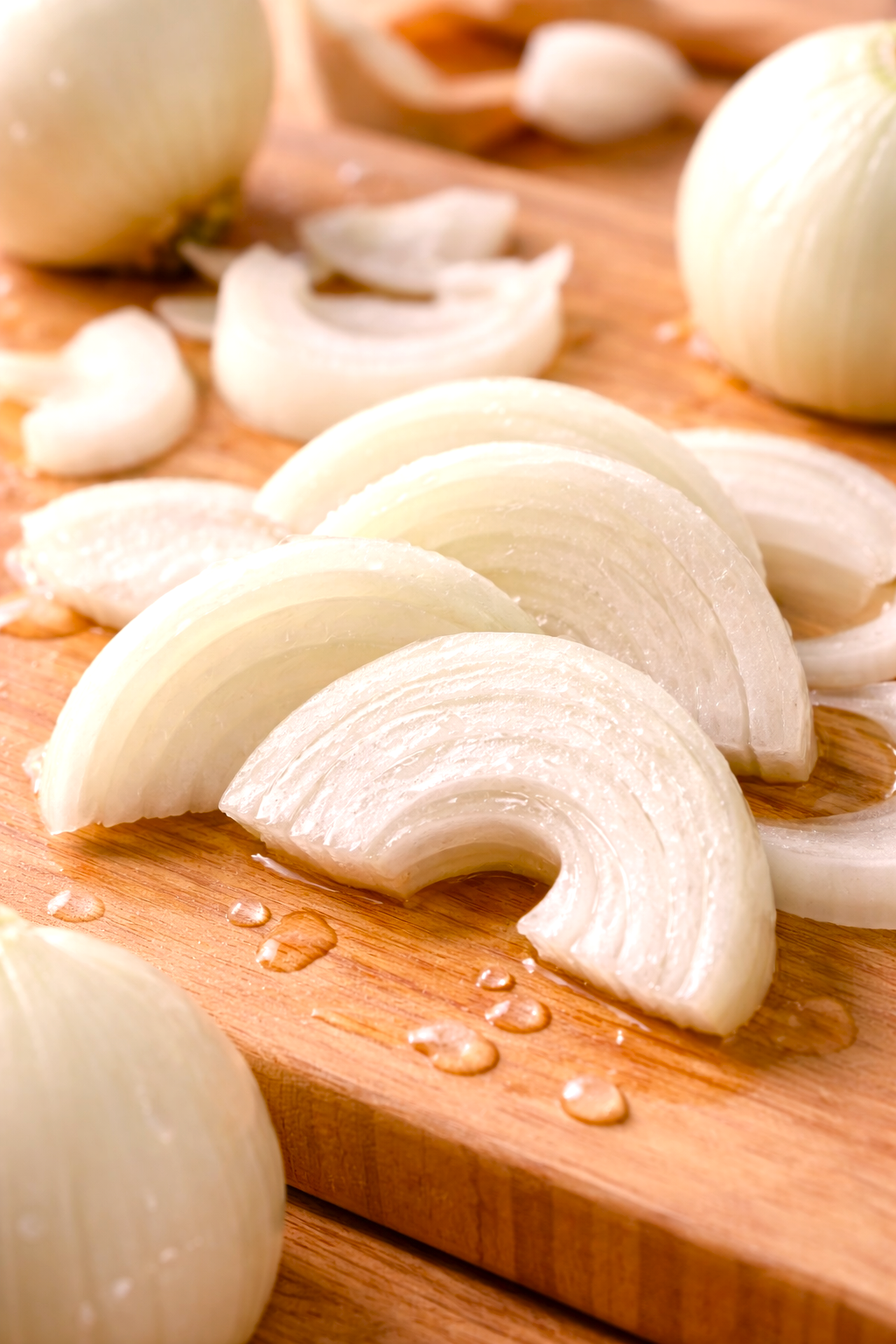
Raw Onion Stomach Pain: The Real Biological Reason It Happens
Raw onion stomach pain is not a sign of a weak digestive system. It happens to nearly everyone — most people just don’t eat enough raw onion at once to notice.
The cause comes down to a single compound called fructans. No human being has the enzyme needed to digest them. Not you, not anyone. When fructans reach your large intestine intact, your gut bacteria ferment them rapidly — producing gas, bloating, cramping, and in some cases, diarrhea.
If raw onions have been giving you trouble, you’re not imagining it. Here’s exactly what’s happening inside your gut, who gets the worst symptoms, and what actually helps.
What Causes Raw Onion Stomach Pain? It’s Called Fructans
Fructans are chains of fructose molecules linked together in a way that human digestive enzymes can’t break apart. According to research, only about 5–15% of fructans are absorbed in the small intestine. The rest travel through your digestive tract mostly intact until they reach your colon.
Once there, your gut bacteria ferment them rapidly. This produces gases — hydrogen, methane, and carbon dioxide — along with an osmotic effect that pulls excess water into the colon. The result: bloating, cramping, gas, and loose stools.
Fructans belong to a group of carbohydrates called FODMAPs (Fermentable Oligosaccharides, Disaccharides, Monosaccharides, and Polyols). Onions are one of the most concentrated sources of fructans in the average diet — second only to wheat. This is why raw onion stomach pain is so common, and why onions are typically the first food eliminated on a low-FODMAP diet.
→ Related: Cabbage Juice Benefits: Does It Really Help Your Stomach?
Why Raw Onions Cause More Stomach Pain Than Cooked Onions
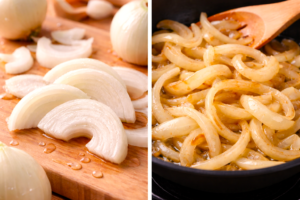
Raw onions hit harder than cooked onions for two reasons.
First, raw onions contain higher concentrations of fructans and sulfur compounds that haven’t been broken down by heat. Second, cooking changes the texture and cell structure of the onion, making it slightly easier to process — though this comes with an important caveat.
Many people assume cooking destroys fructans. It doesn’t. Research from Monash University confirms that both raw and cooked onions remain high in FODMAPs. Even caramelized onions — despite tasting sweet and soft — maintain high fructan levels. Heat changes flavor and texture, but it does not destroy the fructan molecules responsible for raw onion stomach pain.
There is one exception: when onions are cooked in water (like in a soup or broth), fructans leach out into the liquid because they’re water-soluble. But this only helps if you’re not drinking the broth. Add onions to a soup and eat the whole thing, and you’re still consuming the fructans — they’ve just moved from the onion into the liquid.
→ Related: Raw vs Cooked Cabbage: Nutrition Differences and Which Is Better?
Who Gets the Worst Raw Onion Stomach Pain?
While fructans cause some degree of fermentation in everyone’s gut, symptoms vary significantly depending on a few key factors.
People with IBS are the most affected group. Research suggests that fructan intolerance affects an estimated 70–80% of IBS sufferers, making raw onion stomach pain one of the most commonly identified dietary complaints. People with IBS tend to have heightened visceral sensitivity — their gut registers the pressure from gas and bloating as pain more intensely than people without the condition.
People with fructan malabsorption experience stronger symptoms even without a formal IBS diagnosis. Their digestive systems are simply less efficient at handling the small percentage of fructans that should be absorbed in the small intestine.
People with SIBO (Small Intestinal Bacterial Overgrowth) can also react strongly, because excess bacteria in the small intestine begin fermenting fructans earlier in the process — before they even reach the colon.
On the other end of the spectrum, some people eat raw onions daily with zero discomfort. This usually comes down to gut microbiome diversity. A microbiome rich in fiber-fermenting bacteria can process fructans more efficiently, converting them into beneficial short-chain fatty acids rather than excess gas.
Raw Onion Stomach Pain Symptoms: What to Expect and When
Raw onion stomach pain typically doesn’t appear immediately after eating. Because fructans need to travel to the large intestine before fermentation begins, most people experience symptoms 1 to 3 hours after eating — sometimes up to 6 hours later.
Common symptoms include:
- Bloating and abdominal distension
- Cramping or sharp abdominal pain
- Excessive gas
- Loose stools or diarrhea
- A general feeling of heaviness or discomfort
Most raw onion stomach pain resolves within 6 to 12 hours. If symptoms persist beyond 24 hours or worsen significantly, it’s worth consulting a doctor to rule out other conditions.
How to Prevent Raw Onion Stomach Pain Without Giving Up Onions
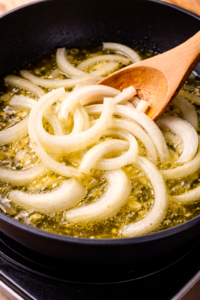
You don’t have to eliminate onions entirely. These strategies genuinely help — some more than others.
Reduce your portion size. Fructan tolerance is highly dose-dependent. Some people can handle a small amount of onion in a cooked dish without any reaction, even if a full raw onion causes significant pain. Start smaller than you think you need to.
Use onion-infused oil instead. Fructans are water-soluble but do not dissolve in oil. You can sauté onion chunks in olive oil, remove the pieces before eating, and keep the flavor without most of the fructans. This is one of the most effective workarounds for people dealing with raw onion stomach pain.
Switch to scallion greens. The green tops of scallions (spring onions) are low in FODMAPs, unlike the white bulb. Monash University data shows that scallion greens are low-FODMAP at approximately 75g per serving — delivering a similar fresh flavor without triggering stomach pain.
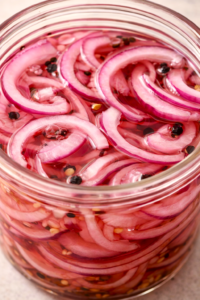
Try pickled onions. Because fructans are water-soluble, they leach out into pickling liquid over time. Research suggests that the fructan content of pickled onions can be reduced by around 80% when drained — making them a surprisingly gut-friendly option for people who react to raw ones.
Consider digestive enzyme supplements. Some products contain enzymes designed to help break down fructans before they reach the colon. Evidence is still emerging, but early results are promising for people with chronic fructan intolerance.
→ Related: Eating One Handful of Cabbage a Day: A Simple Habit for Better Health
Onion Intolerance vs. Onion Allergy: Not the Same Thing
These two are often confused, but the difference matters.
An onion intolerance is a digestive issue. Fructans ferment in your colon and cause GI symptoms — bloating, gas, cramping — usually appearing hours after eating. It’s uncomfortable but not dangerous.
An onion allergy is an immune system response. Symptoms appear quickly — within minutes — and can include hives, swelling, runny nose, or in severe cases, anaphylaxis. True onion allergies are rare but serious.
If your symptoms are purely digestive and appear hours after eating, you’re almost certainly dealing with fructan intolerance, not an allergy. If you experience skin reactions, respiratory symptoms, or rapid swelling, see a doctor.
The Counterintuitive Truth: Fructans Are Actually Good for Most People
Here’s the part that surprises most people: the very compounds that cause raw onion stomach pain in sensitive individuals are classified as prebiotics — meaning they feed beneficial gut bacteria.
In people without digestive sensitivities, fructans from onions support the growth of Bifidobacteria and Lactobacilli — two of the most well-studied beneficial bacterial strains in the gut. The fermentation process that produces uncomfortable gas in IBS patients is the same process that nourishes a healthy microbiome in everyone else.
This is why blanket advice to “avoid onions” isn’t useful. If your gut handles them well, onions are genuinely good for you. If they consistently cause pain, that’s useful information about your digestive system — not a reason to feel like something is wrong with you.
The Bottom Line
Raw onion stomach pain is caused by fructans — fermentable carbohydrates that no human can fully digest. The fermentation happens in your colon, which is why symptoms arrive hours after eating, not immediately. Raw onions contain more of these compounds than cooked ones, though cooking doesn’t eliminate them entirely.
If you’re consistently reacting to onions, you’re not alone. The strategies that actually work are portion reduction, onion-infused oil, scallion greens as a substitute, and pickled onions when you want the flavor without the pain.
And if raw onions have never bothered you? Consider yourself lucky — your gut bacteria are doing something right.
If you found this helpful, you might also want to read: Raw vs Cooked Cabbage: Which Is Better for Your Gut?
→ Related: Can You Eat Sweet Potatoes and Milk Together? Benefits, Risks & Tips