Stir-frying vegetables in oil can add more calories than a bowl of white rice — which is why microwave steamed vegetables are worth knowing about.
A tablespoon of cooking oil adds 120 calories. Eggplant and zucchini — two of the most popular vegetables for stir-frying — have a spongy texture that absorbs oil rapidly. By the time the pan is done, those vegetables have soaked up far more than you poured in. The vegetables are healthy. The oil load isn’t.
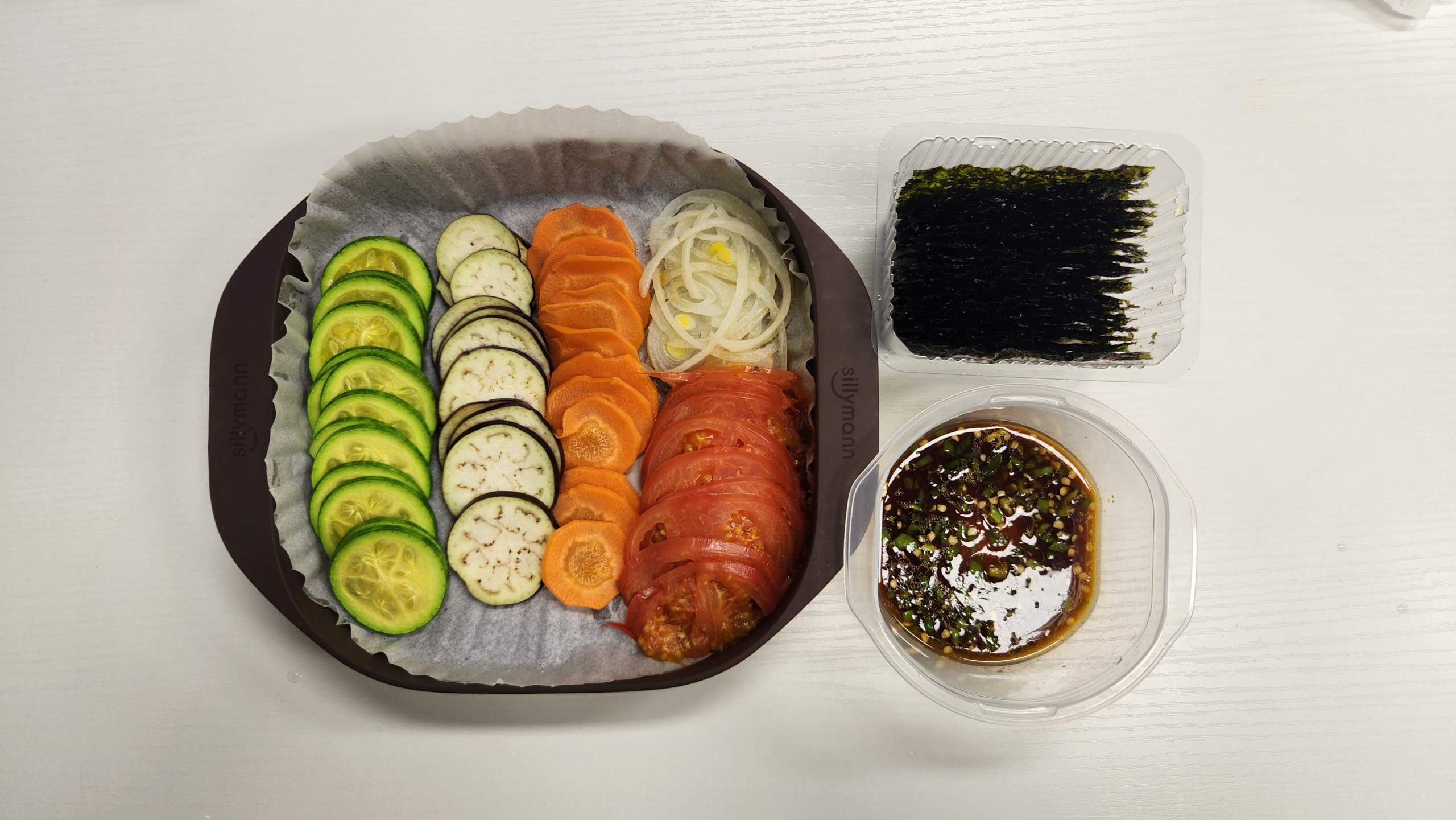
I switched to microwave steaming for exactly this reason. I use organic eggplant, zucchini, tomato, and onion — thinly sliced, layered in a microwave-safe container, cooked for five minutes with no oil at all. The whole dish comes in under 80 calories. It takes less time than heating a pan. And it tastes better than the stir-fried version — because you can actually taste the vegetables.
Why Microwave Steamed Vegetables Beat Stir-Frying for Low-Calorie Eating
The problem with stir-frying vegetables isn’t the vegetables — it’s what they absorb. Eggplant and zucchini have a spongy cellular structure that soaks up oil rapidly during high-heat cooking. A tablespoon of oil adds 120 calories. Two tablespoons — which is easy to use without realizing it — adds 240 calories to a dish that would otherwise be under 80.
Microwave steaming eliminates that entirely. No oil enters the vegetables because there’s no oil in the container. The vegetables cook in their own moisture — the thin slices of tomato and onion release liquid that steams the eggplant and zucchini from below. The result is tender, naturally flavored vegetables with nothing added.
Research shows that microwaving preserves nutrients as well as — and in some cases better than — conventional steaming. Because cooking time is short and no water is added, water-soluble vitamins like vitamin C and B vitamins stay in the food rather than leaching into cooking liquid. For a dish built around vegetables, that matters.
zucchini and blood sugar
Why This Works for GLP-1 Diets
GLP-1 medications (like Ozempic and Wegovy) reduce appetite significantly. People taking them often struggle to eat enough volume while still meeting fiber and nutrient targets — because they simply aren’t hungry. A large plate of low-calorie, high-fiber vegetables solves this efficiently: high volume, high nutrition, low calorie load.
This dish fits that need precisely. A full serving — eggplant, zucchini, tomato, and onion — provides roughly 60–80 calories, 4–6 grams of fiber, and a range of antioxidants including nasunin (from eggplant skin), lycopene (from tomato), and quercetin (from onion). It can be eaten as a side alongside a protein source, or as a light meal with tofu or eggs added on top.
For blood sugar management more broadly, all four vegetables in this dish are low-glycemic. Eggplant and zucchini both have a glycemic index of around 15. Tomato sits at 15. Onion at around 10. The entire dish produces virtually no blood glucose response on its own — which makes it a useful base for anyone managing blood sugar, whether on GLP-1 medication or not.
Why Organic Matters for This Dish
I use organic vegetables for this recipe specifically because the skin stays on everything. Eggplant skin contains the highest concentration of nasunin — the antioxidant unique to eggplant that research suggests can inhibit enzymes involved in blood sugar conversion. Zucchini skin contains most of its fiber. Tomato and onion skins add texture and nutrients.
When you’re eating the skin, what’s on the skin matters more. Organic certification means no synthetic pesticide residues on the surface — which is relevant when you’re eating everything whole, unpeeled, with nothing to dilute what’s been applied to the outside.
This doesn’t mean non-organic vegetables are unsafe — they’re not. But for a dish where the skin is intentionally included and contributes significantly to the nutritional value, organic is a reasonable choice if it’s accessible.
The Recipe
Ingredients
- 1 small organic eggplant
- 1 small organic zucchini
- 1 organic tomato
- ½ organic onion
- Roasted seaweed sheets (optional, for wrapping)
Simple sauce (optional):
- 2 tbsp soy sauce
- 1 tbsp vinegar
- ½ tsp minced garlic
- 1 tsp sesame oil or perilla oil
How to Make It
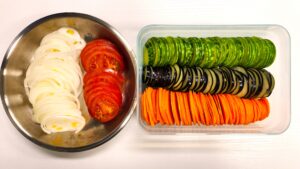
Step 1 — Slice everything thinly. About 3–4mm thick. Thin slices cook evenly and keep the microwave steamed vegetables moist. Thin slices cook evenly and keep the vegetables moist. Thick slices won’t cook through properly in 5 minutes.
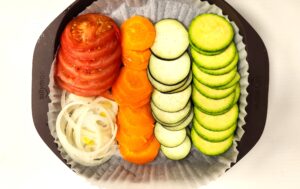
Step 2 — Layer in a microwave-safe container. Place the onion at the bottom — it releases the most liquid and creates a steam base. Layer zucchini, eggplant, and tomato on top. You can slightly overlap slices, but avoid stacking them too thickly.
Step 3 — Microwave for 5 minutes. No water needed. The vegetables steam in their own moisture. Because they’re thinly sliced, they cook quickly without drying out.
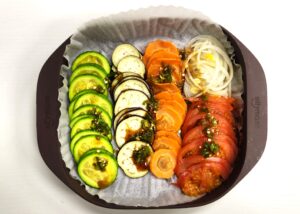
Step 4 — Add the sauce and serve. Mix the sauce ingredients and drizzle lightly over the vegetables. Wrap in roasted seaweed if using — the seaweed adds umami and a slight crunch that makes the dish more satisfying.
Calories per serving: ~60–80 kcal | Prep + cook time: 5 minutes
What Each Vegetable Contributes
This isn’t a random combination — each vegetable adds something distinct.
Eggplant — Nasunin in the skin may inhibit blood sugar enzymes. High in anthocyanins. Spongy texture absorbs the sauce well after steaming without needing oil to carry flavor.
Zucchini — GI of 15, extremely low calorie (17 kcal per 100g), high water content. Adds bulk to the dish without adding meaningful calories or carbohydrates.
Tomato — Lycopene content increases with heat. Releases natural acidity during steaming that brightens the overall flavor of the dish. Adds color and moisture.
Onion — Quercetin, a flavonoid associated with anti-inflammatory effects. Natural sweetness releases during cooking and acts as the flavor base of the dish — without any added sugar.
How to Make It More Filling
This dish works well as a light meal on its own, but adding protein makes it a complete meal that keeps you full longer — which is particularly useful for GLP-1 users managing reduced appetite windows.
Options that work well:
- Silken tofu cubed and microwaved alongside the vegetables
- A soft-boiled or poached egg on top
- Grilled chicken sliced thin and added after steaming
- Canned tuna drained and mixed into the sauce
The sauce carries the protein well regardless of which option you choose. Even 50–80g of protein added brings the meal into a nutritionally complete range.
Frequently Asked Questions
Do microwave steamed vegetables lose nutrients?
Less than most cooking methods. Microwaving is actually one of the best ways to preserve nutrients because cooking time is short and no water is added. Boiling causes significant vitamin loss as water-soluble vitamins leach into the cooking liquid. Microwaving keeps them in the food.
Learn more at Healthline.
Can I use different vegetables?
Yes — this method works with broccoli, bell peppers, cabbage, mushrooms, and most non-starchy vegetables. Adjust timing slightly for denser vegetables like carrots (add 1–2 minutes) or leafy greens (reduce to 2–3 minutes).
Is this good for weight loss?
A full serving under 80 calories with 4–6 grams of fiber is hard to beat for volume eating. High fiber content slows digestion and promotes satiety. It won’t cause blood sugar spikes that drive subsequent hunger. For anyone managing weight — on GLP-1 medication or not — this kind of dish is useful precisely because it’s filling without being calorically dense.
Why no salt before steaming?
Salt draws moisture out of vegetables before they cook, which can make them release too much liquid and become waterlogged rather than tender. Adding the sauce after steaming keeps the texture better and allows you to control sodium more precisely.
Most stir-fried vegetable dishes are healthier than fast food — but they’re not as healthy as people assume, because of the oil they don’t think about. Microwave steaming removes that variable entirely.
Five minutes. No oil. Under 80 calories. The vegetables taste like themselves — which, it turns out, is enough.