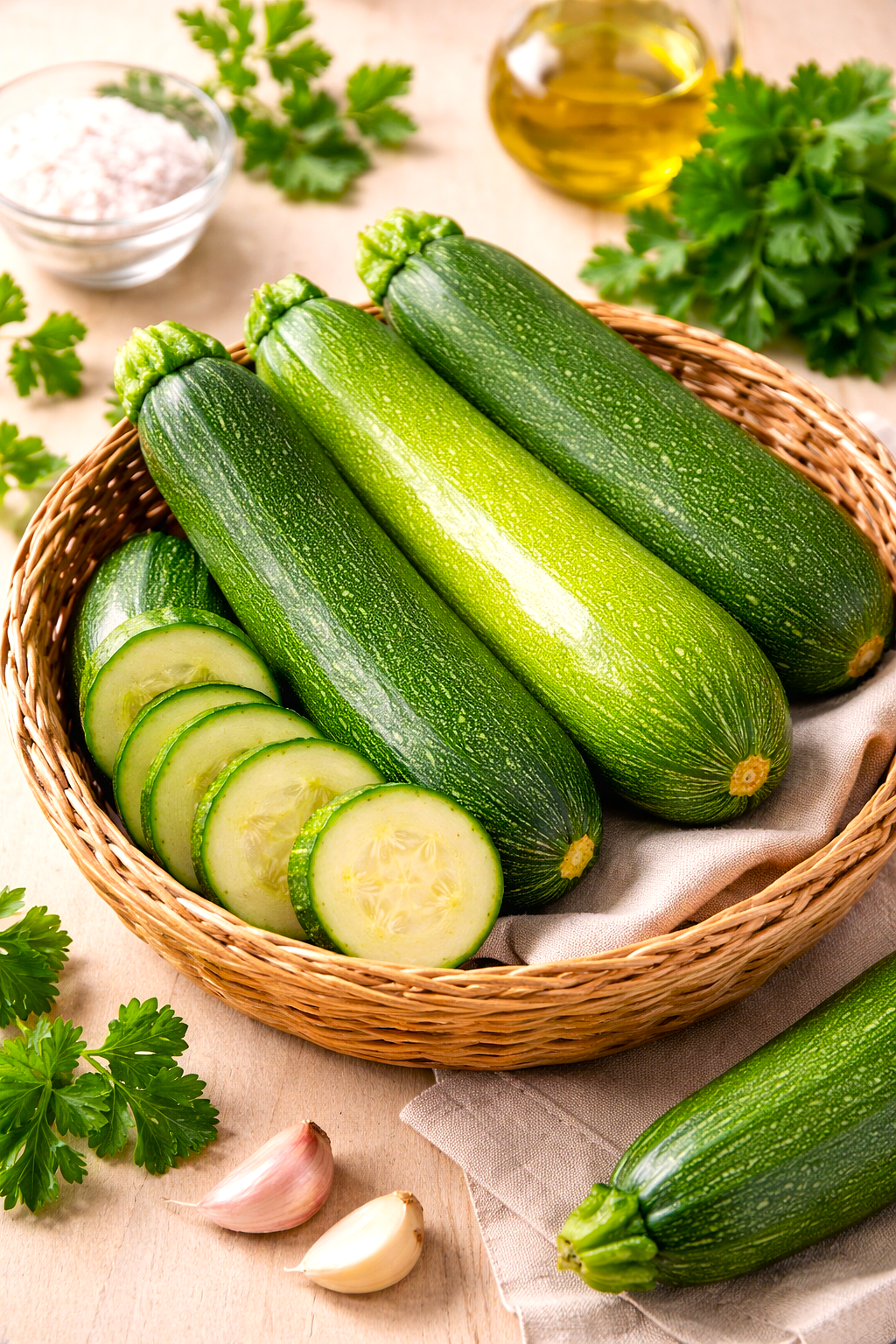
Zucchini has a glycemic index of 15. That’s one of the lowest of any vegetable — lower than broccoli, lower than spinach, lower than almost anything you’ll find in the produce aisle. For blood sugar control, it’s about as safe as a food gets.
But here’s what most zucchini guides don’t tell you: the vegetable isn’t the problem. The way most people cook it is.
Batter it, coat it in flour, and drop it in oil — and you’ve just turned one of the most blood sugar-friendly vegetables into something that spikes glucose faster than white bread. The zucchini inside is still GI 15. Everything surrounding it is not.
Why Zucchini Is Good for Blood Sugar Control
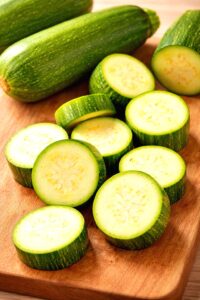
The numbers are straightforward. A 100g serving of raw zucchini contains approximately 3–4 grams of carbohydrates, 1 gram of fiber, and around 17 calories. With a glycemic index of 15 and a glycemic load of just 1, it has virtually no meaningful impact on blood glucose when eaten whole.
The reason comes down to composition. Zucchini is roughly 94% water, which means there’s almost no starch or sugar to digest. What little carbohydrate it contains is partially offset by fiber, which slows glucose absorption. The result is a vegetable that your blood sugar essentially ignores.
This is why zucchini works well as a pasta substitute — zucchini noodles in place of wheat pasta can reduce the carbohydrate load of a meal by 80% or more, with a fraction of the blood sugar impact.
Zucchini Blood Sugar Impact by Cooking Method
Here’s where it gets important. Not all cooking methods are equal — and one in particular changes the equation completely.
Steaming or Boiling — Best Option
Steaming preserves zucchini’s nutritional profile almost entirely. No added fat, no added carbohydrates, no change to its GI. A steamed zucchini has essentially the same blood sugar impact as a raw one. This is the cooking method that keeps zucchini in the “eat freely” category.
Sautéing or Stir-Frying — Still Good

A light sauté in a small amount of olive oil adds calories but doesn’t significantly affect blood sugar response. The zucchini itself remains low-GI. Quick stir-frying — 3 to 5 minutes over high heat — also preserves more vitamin C than boiling or steaming. This is most people’s everyday cooking method, and it works well.
Grilling or Roasting — Good
Grilling and roasting without added coatings keep the glycemic impact low. Some moisture is lost, which slightly concentrates the carbohydrates — but with zucchini’s naturally low carb content, this difference is negligible. A grilled zucchini with olive oil and herbs is a solid choice.
Frying With Batter or Breadcrumbs — The Problem
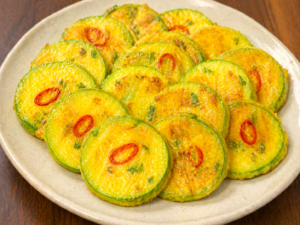
This is where zucchini stops being a blood sugar-friendly food.
When zucchini is coated in flour, egg, and breadcrumbs before frying, the coating — not the vegetable — becomes the dominant nutritional factor. A typical breaded and fried zucchini serving adds 20–30 grams of refined carbohydrates from the coating alone, plus significant fat from the frying oil. That combination produces a blood sugar response that has nothing to do with the zucchini inside.
The zucchini is still GI 15. But the batter surrounding it behaves more like fried dough. You’re not really eating a vegetable anymore — you’re eating a carbohydrate delivery system with zucchini in the middle.
The Zucchini Noodle Question
Zucchini noodles — often called “zoodles” — have become popular as a low-carb pasta alternative. From a blood sugar perspective, the swap is genuinely useful.
A cup of cooked wheat pasta contains roughly 40 grams of carbohydrates with a GI around 50. A cup of zucchini noodles contains around 4 grams of carbohydrates with a GI of 15. The blood sugar difference between a pasta dinner and a zoodle dinner is significant — especially if you’re eating a large portion.
The catch is the sauce. A zucchini noodle dish with a heavy cream sauce or a sweet marinara can still produce a meaningful blood sugar response — not from the zucchini, but from what’s on top of it. The vegetable is doing its job; the accompaniments matter too.
Can You Eat Zucchini Every Day?
Yes — with very few caveats. Zucchini is low in calories, low in carbohydrates, and high in water content. It provides vitamin C, potassium, and the antioxidants lutein and zeaxanthin. Its blood sugar impact is negligible across virtually all reasonable portion sizes.
The one consideration: zucchini is relatively low in protein and fat, so eating it as a meal on its own won’t keep you full for long. It works best as part of a balanced plate that includes a protein source — chicken, tofu, eggs, legumes — which also helps blunt any minor blood sugar response from the meal overall.
Best and Worst Ways to Eat Zucchini for Blood Sugar
| Cooking Method | Blood Sugar Impact | Notes |
|---|---|---|
| Raw | ✅ Lowest | Maximum fiber, minimal processing |
| Steamed | ✅ Lowest | Best nutrient retention |
| Stir-fried (no coating) | ✅ Low | Quick cooking preserves vitamin C |
| Grilled or roasted | ✅ Low | Avoid heavy marinades with sugar |
| Zucchini noodles | ✅ Low | Watch the sauce, not the zucchini |
| Breaded and fried | ❌ High | Coating adds 20–30g refined carbs |
| Battered (tempura style) | ❌ High | Same problem as breaded — coating dominates |
Frequently Asked Questions
Does cooking zucchini raise its glycemic index?
Basic cooking methods — steaming, boiling, grilling, sautéing — do not significantly raise zucchini’s GI. The vegetable remains low-glycemic across all standard cooking methods. The exception is adding a starchy coating before frying, which introduces high-GI carbohydrates from the batter. Learn more about zucchini’s full nutritional benefits at Healthline.
Is zucchini better than other vegetables for blood sugar?
Zucchini is among the lowest-GI vegetables available, but it’s not uniquely special in that category. Broccoli, cauliflower, spinach, cucumbers, and most non-starchy vegetables have similarly low glycemic impact. The advantage of zucchini is its versatility — it can replace pasta, be spiralized, grilled, stuffed, or eaten raw in ways that make it easy to eat regularly.
Can people with diabetes eat zucchini freely?
For most people managing blood sugar, yes — zucchini in standard cooking methods is effectively a free food from a glycemic perspective. The carbohydrate content is low enough that portion size rarely becomes an issue. The caveat, as always, is what it’s cooked with or served alongside.
Is fried zucchini bad for blood sugar?
The zucchini itself isn’t the problem — the coating is. Breaded and fried zucchini introduces 20–30 grams of refined carbohydrates per serving from the batter, which produces a blood sugar response similar to fried bread. If you want fried zucchini without the blood sugar spike, try pan-frying thin slices with just olive oil and no coating — you get the texture with a fraction of the carbohydrate load.
Zucchini is one of the most blood sugar-friendly vegetables you can eat. GI of 15, almost no carbohydrates, high water content — it’s about as close to a free pass as food gets.
The mistake isn’t eating zucchini — but if you’re also watching fruit intake, here’s a guide to best fruits for blood sugar control. It’s forgetting that what you coat it in, fry it with, or serve it alongside changes the equation entirely. Keep the zucchini. Lose the batter.