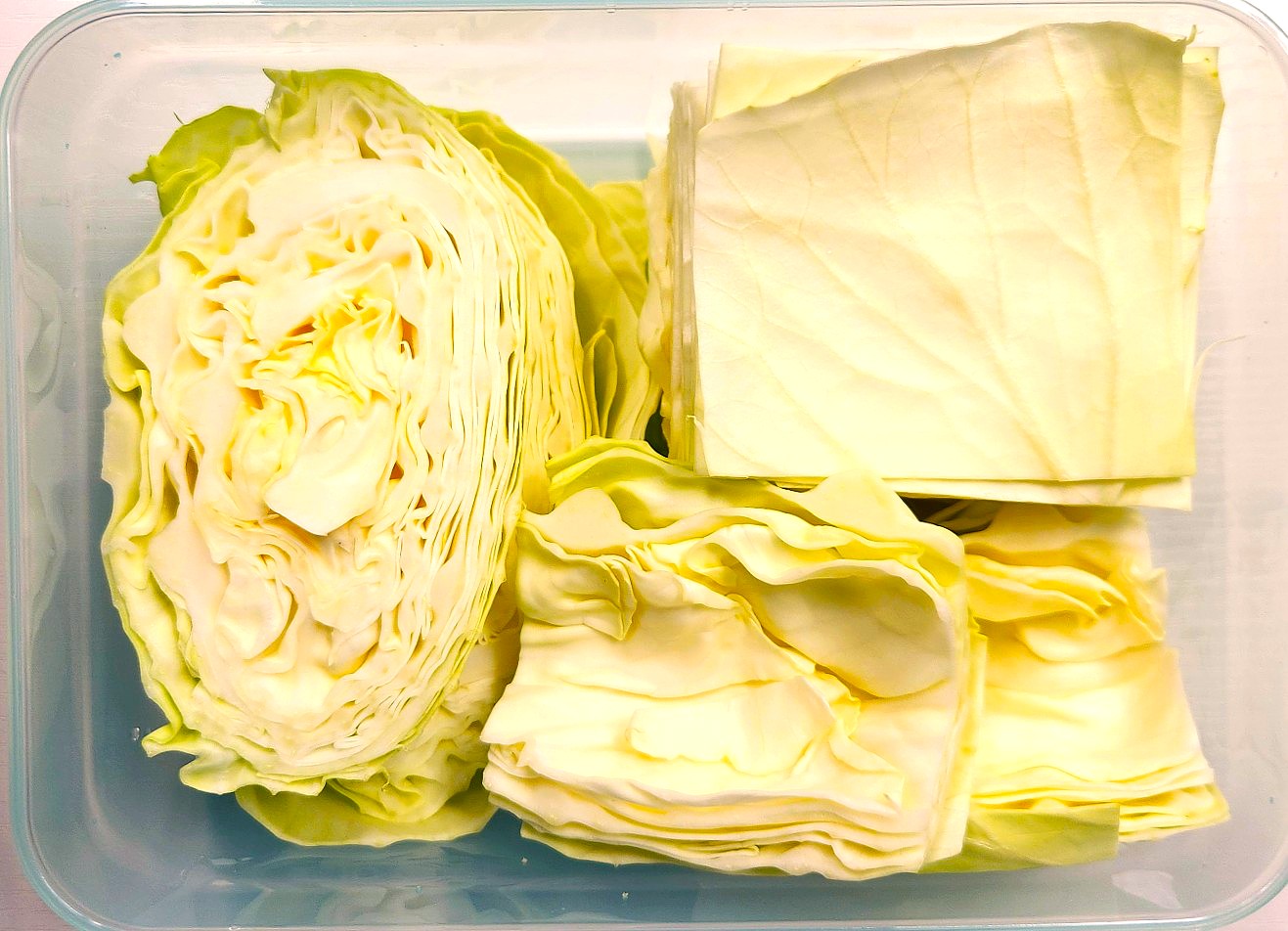
Knowing how to prepare cabbage properly can make a huge difference in how much you actually use it. Cabbage is one of the most affordable and nutritious vegetables available, but many people buy a whole head, use a small portion, and end up throwing the rest away because they are not sure how to handle it efficiently.
In this step-by-step guide with photos, we will show you exactly how to prepare a whole cabbage from start to finish — including how to use every single part without wasting anything. Once you learn this method, meal preparation becomes much faster and easier throughout the week.
Why Learning How to Prepare Cabbage Matters
A whole head of cabbage can provide multiple meals for an entire week. The problem is that most people only know one or two ways to cut it, which means large portions go unused and eventually get thrown away.
By understanding the different sections of a cabbage head and what each part is best used for, you can:
• Use 100% of the cabbage with zero waste
– Have ready-to-cook cabbage stored in the refrigerator all week
– Save money by buying whole heads instead of pre-cut portions
– Cook faster on busy weekdays because the preparation is already done
This guide will walk you through each step clearly, so you can apply it immediately the next time you bring a whole cabbage home.
What You Need to Prepare Cabbage
Before you start, make sure you have the following ready:
• A whole fresh cabbage head
– A large, sharp kitchen knife
– A clean cutting board
– Airtight containers or zip-lock bags for storage
– Running water for rinsing
A sharp knife makes the process significantly easier and safer. If your knife is dull, the cabbage can slip while cutting, which increases the risk of injury.
Step 1: Remove the Outer Leaves
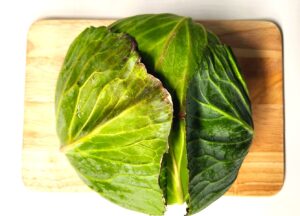
The first step in preparing a whole cabbage is to remove the outer leaves. These are the one or two outermost layers that are most exposed to the environment during transport and storage. They are often slightly wilted, discolored, or have small brown spots on the edges.
Simply peel these outer leaves away by hand and discard them. Do not try to salvage leaves that look significantly damaged — the inner leaves will be much fresher and more appealing.
After removing the outer leaves, rinse the entire cabbage head lightly under cold running water. This removes any surface dirt or residue and prepares the cabbage for cutting. Pat it dry gently with a clean cloth or paper towel before placing it on the cutting board.
Step 2: Cut Around the Core
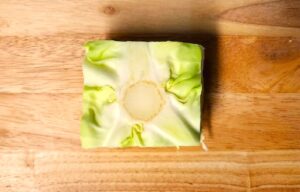
Place the cabbage upside down on the cutting board so that the core — the hard, dense stem at the base — is facing upward. Using your sharp knife, make four cuts around the core in a square shape, cutting deep enough to separate it from the surrounding leaves.
Once you have made these cuts, the cabbage will naturally begin to separate into several large sections. This makes the rest of the preparation much easier to handle.
The core itself is firm but completely edible. Do not throw it away — we will show you how to use it in a later step.
Step 3: Use the Wide Middle Leaves for Cabbage Wraps
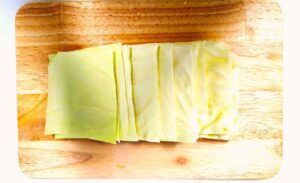
The wide, flat leaves from the middle section of the cabbage are the most flexible and tender part of the whole head. These leaves are perfect for use as natural wraps — a healthy, low-carb alternative to bread or tortillas.
These wide middle leaves work particularly well for:
• Lightly blanched cabbage wraps filled with meat, rice, or vegetables
– Wrapping grilled chicken, ground beef, or tofu for a fresh and light meal
– Low-carb meal options for anyone reducing their bread or grain intake
– Korean-style ssam wraps with rice and a small amount of sauce
To prepare them for wrapping, simply blanch the leaves in boiling water for 30 to 60 seconds until they become pliable, then drain and pat dry. They are now ready to use as flexible, natural wraps.
Step 4: Use the Thick Side Sections as Cabbage Steaks
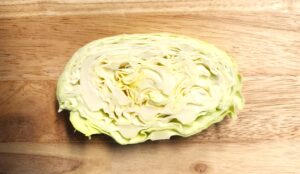
The thicker side sections of the cabbage — the parts between the wide middle leaves and the outer edges — are denser and hold their shape well during cooking. These sections are ideal for making cabbage steaks.
To prepare cabbage steaks:
• Slice the thick sections into pieces about 1 to 2 centimeters thick
– Pan-grill or roast them in the oven at medium-high heat
– Season with olive oil, salt, pepper, and garlic powder
– Cook for 3 to 4 minutes per side until golden and slightly caramelized
Cabbage steaks are a simple, satisfying side dish that most people have never tried. The caramelization from grilling brings out a natural sweetness in the cabbage that is completely different from its raw flavor.
Step 5: Shred the Smaller Pieces
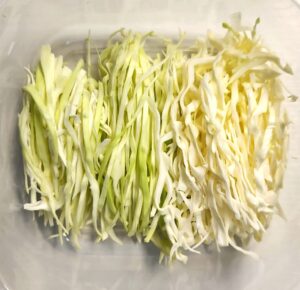
The smaller remaining pieces — the parts that do not fit neatly into wraps or steaks — are perfect for shredding. Shredded cabbage is one of the most versatile ingredients you can keep in the refrigerator.
Use shredded cabbage for:
• Fresh salads and coleslaws
– Stir-fries with garlic and sesame oil
– Noodle dishes and fried rice
– Soups and stews
– Tacos and grain bowls
To shred cabbage quickly, stack a few leaves on top of each other and slice them thinly with your knife. Alternatively, use a mandoline slicer or food processor for larger quantities.
Store shredded cabbage in an airtight container in the refrigerator. It stays fresh for up to five days, making it incredibly convenient for quick weekday meals.
Step 6: Do Not Throw Away the Core
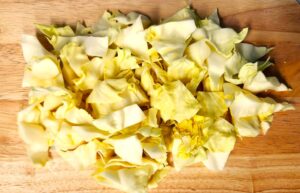
Many people automatically discard the cabbage core, assuming it is too tough to eat. In reality, the core is completely edible and has a firm, crunchy texture that works well in certain dishes.
Here are the best ways to use the cabbage core:
Slice it thinly for stir-fries — Cut the core into thin slices and add it to stir-fries. The firm texture holds up well to high heat and adds a pleasant crunch to the dish.
Use it in pickles — The core is excellent for quick pickling. Slice it thinly, cover with a mixture of vinegar, salt, and a small amount of sugar, and leave it for a few hours. It makes a great crunchy side dish.
Add it to soups — Dice the core and add it to soups and stews. It softens during cooking and blends in naturally with the other ingredients.
Using the core means you get 100% use out of every cabbage you buy — reducing food waste and getting the most value for your money.
How to Store Prepared Cabbage for Easy Cooking
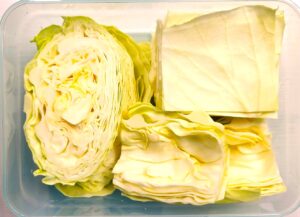
One of the biggest advantages of knowing how to prepare cabbage at once is that you can store each section separately.
Here is how to store each part:
Wide leaves (for wraps) — Store flat in a large airtight container or zip-lock bag. Keep them whole until you are ready to use them. They stay fresh for 3 to 4 days.
Thick sections (for steaks) — Wrap tightly in plastic wrap or store in an airtight container. They stay fresh for up to 5 days.
Shredded cabbage — Store in an airtight container. Add a small piece of paper towel inside to absorb excess moisture and keep the cabbage crisp. It stays fresh for 4 to 5 days.
Core pieces — Store in a small airtight container. Use within 3 days for the best texture.
With all of these sections prepared and stored at the start of the week, adding cabbage to any meal takes just seconds. This makes it much easier to eat cabbage consistently without having to think about preparation every time.
My Personal Experience
When I started preparing cabbage this way — processing the entire head at once at the beginning of the week — cooking during the week became noticeably faster and easier. Having shredded cabbage ready in the refrigerator meant I could add it to any meal without any extra effort.
The biggest change was wasting far less cabbage than before. Previously, I would use part of a head and leave the rest, only to throw it away a week later. Now, every part gets used within a few days, and I find myself buying cabbage more often because I know exactly how to handle it.
Final Summary
Learning how to prepare cabbage efficiently is one of the most practical kitchen skills you can develop. A single whole cabbage head, prepared properly, can provide multiple meals throughout the week with zero waste.
✔ Remove outer leaves and rinse before cutting
✔ Cut around the core to separate the cabbage into sections
✔ Use wide middle leaves for wraps
✔ Use thick side sections for cabbage steaks
✔ Shred smaller pieces for salads, stir-fries, and soups
✔ Use the core in stir-fries, pickles, or soups
✔ Store each section separately for easy weekday cooking
With a little preparation done once, cabbage can become one of the most convenient and versatile vegetables in your weekly cooking routine.
For more on cabbage preparation, visit Healthline’s guide to cabbage nutrition.
Looking for more healthy eating ideas? Explore these related guides: