When someone asks you to name a food high in bell pepper vitamin C content, you probably think of oranges. Most people do. It’s one of the most well-established associations in nutrition.
It’s also significantly wrong.
A yellow bell pepper contains 341mg of bell pepper vitamin C per 100g according to USDA data. That’s not a small difference — yellow bell pepper has more than three times the vitamin C of the fruit that’s been synonymous with vitamin C for decades.
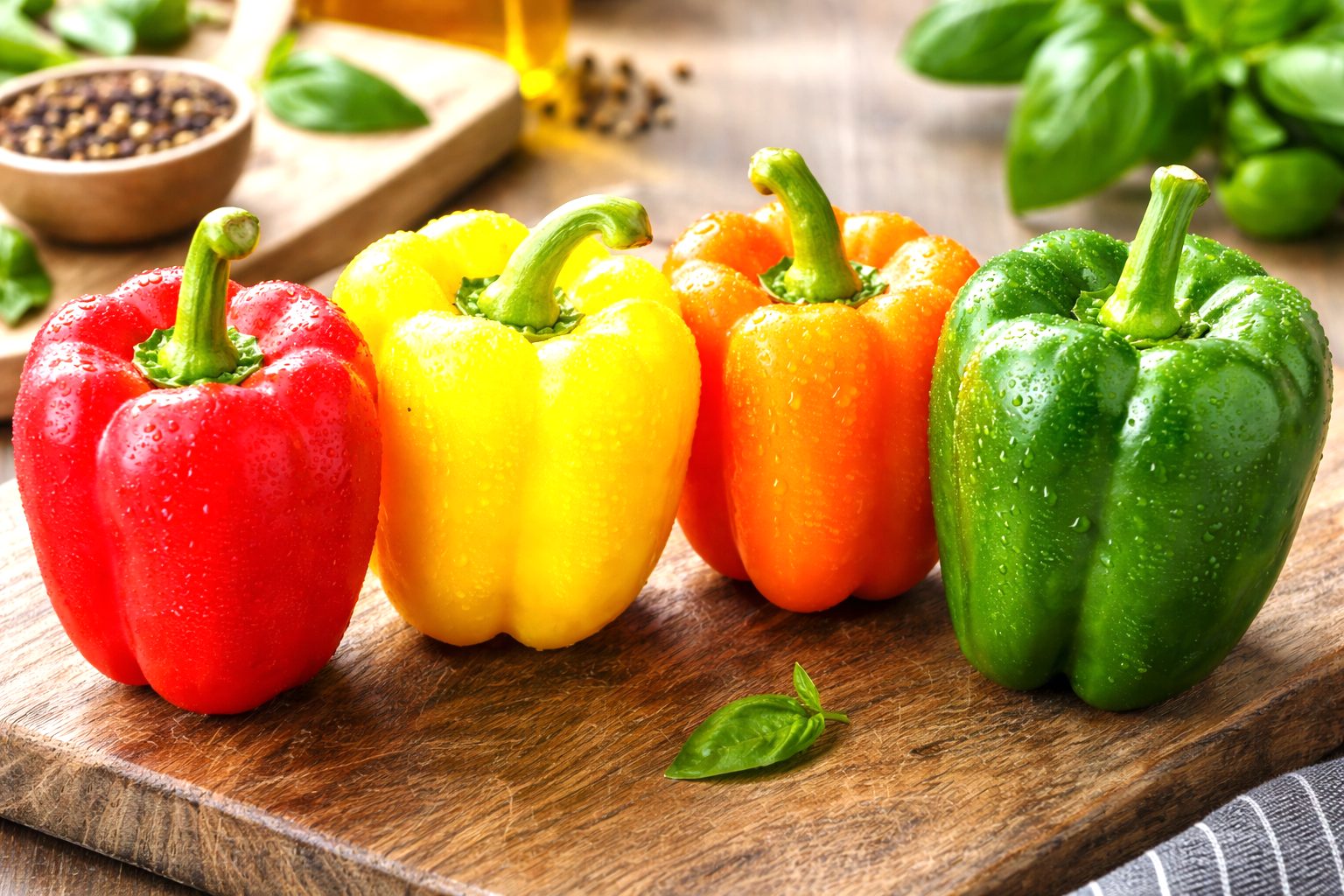
And yellow isn’t even the only color worth knowing about. Each color of bell pepper has a distinct nutritional profile — and which one you choose matters more than most people realize.
Why Bell Pepper Vitamin C Is So High
All bell peppers start green. Red, yellow, and orange peppers are simply green peppers that have been left on the vine to ripen fully — which is why they cost more at the grocery store. The extended ripening time dramatically increases their vitamin C content.
Green bell peppers, harvested before full ripeness, contain around 80mg of vitamin C per 100g — already comparable to an orange. As the pepper continues to ripen and its color develops, ascorbic acid (vitamin C) accumulates significantly. By the time a pepper turns fully yellow, its vitamin C content has more than quadrupled compared to when it was green.
This is the opposite of what most people assume. Green peppers look “fresh” and “healthy” — and they are — but from a vitamin C standpoint, they’re the least developed version of the same vegetable.
zucchini and blood sugar
Bell Pepper Vitamin C by Color
| Color | Vitamin C (per 100g) | % Daily Value | vs. Orange |
|---|---|---|---|
| Yellow | 341mg | 379% | 3.3× higher |
| Orange | 185mg | 206% | 1.8× higher |
| Red | 183mg | 203% | 1.8× higher |
| Green | 80mg | 89% | Similar |
| Orange (fruit) | 53mg | 59% | Baseline |
A single large yellow bell pepper can contain over 300mg of vitamin C — more than three times the recommended daily intake for adults in one vegetable.
What Each Color Is Best For
Vitamin C is the headline, but it’s not the whole story. Each color has a different nutritional emphasis beyond just vitamin C content.
Red Bell Pepper — Best for Antioxidants
Red peppers are the most fully ripened and contain the highest levels of beta-carotene and lycopene — two antioxidants associated with eye health, skin health, and reduced inflammation. They also contain vitamin A at levels significantly higher than other colors. If antioxidant density is the priority, red is the choice.
Yellow Bell Pepper — Best for Vitamin C
The clear winner for vitamin C content. Yellow peppers also contain vitamin B6, folate, and a notably mild, almost fruity sweetness that makes them the most versatile raw pepper for salads and snacking. Their lower calorie count (27 kcal per 100g vs. 49 kcal for an orange) makes them an efficient vitamin C source for people watching calories.
Orange Bell Pepper — Most Balanced
Orange peppers sit between red and yellow in most nutritional categories — high in both vitamin C and beta-carotene, with a balanced sweetness. They’re a good default choice when you want broad nutritional coverage without choosing between the red and yellow profiles.
Green Bell Pepper — Best for Cooking and Lower Sugar
Green peppers are harvested before full ripeness, which gives them a slightly bitter, grassier flavor and a lower natural sugar content than the other colors. Because they’re less ripe, they also contain less vitamin C and fewer antioxidants — but they’re lower in calories and hold up better to high-heat cooking without becoming mushy. For stir-fries and savory cooked dishes, green is often the practical choice.
Does Cooking Destroy Bell Pepper Vitamin C?
Yes — bell pepper vitamin C is heat-sensitive, and the extent of loss depends on the method.
Vitamin C is water-soluble and heat-sensitive. Boiling bell peppers in water causes significant vitamin C loss — much of it leaches into the cooking water. Roasting and grilling at high heat also reduces vitamin C content, though less dramatically than boiling.
The cooking methods that preserve the most vitamin C:
- Raw — maximum vitamin C, no loss
- Quick stir-fry — minimal loss due to short cooking time
- Roasting at moderate heat — some loss but retains most other nutrients
- Microwaving — surprisingly good at preserving vitamin C due to short cooking time and no water
For maximum vitamin C, eat bell peppers raw. Yellow or red peppers sliced into a salad or eaten as a snack deliver the full 341mg or 183mg per 100g. Once you cook them, especially in water, that number drops.
Should You Mix Colors?
Yes — and this is the most practical takeaway from the nutritional differences between colors.
Red peppers lead in beta-carotene and lycopene. Yellow leads in vitamin C. Orange provides a balanced middle ground. Green adds fiber and works best in cooked applications. Using a mix of two or three colors gives you broader antioxidant coverage than any single color can provide alone.
A simple red and yellow combination covers both the antioxidant spectrum (red’s beta-carotene) and vitamin C (yellow’s ascorbic acid) in one dish. The visual contrast also happens to make food look significantly more appealing — which matters for actually eating vegetables consistently.
Frequently Asked Questions
Which bell pepper has the most vitamin C?
Yellow bell pepper contains the most vitamin C of any bell pepper color — 341mg per 100g according to USDA data. That’s more than three times the vitamin C in an orange (53mg per 100g) and more than four times the amount in a green bell pepper.
Are green bell peppers less healthy than red or yellow?
Not less healthy — just less ripe. Green peppers contain fewer antioxidants and less vitamin C because they’re harvested before full ripeness, but they’re still a nutritious, low-calorie vegetable. They have lower sugar content than fully ripened peppers, which makes them a good choice for people minimizing sugar intake.
Why are red and yellow bell peppers more expensive than green?
Because they’re the same plant, left on the vine longer to ripen fully. The extended growing time increases production costs. Green peppers are harvested early — they’re faster and cheaper to produce, which is reflected in the price.
Does cooking bell pepper destroy the vitamin C?
Cooking reduces vitamin C content, with boiling causing the most loss (vitamin C leaches into the water). Quick stir-frying and microwaving preserve significantly more. For maximum vitamin C, eat bell peppers raw — a yellow pepper eaten raw provides more vitamin C than almost any other food per serving.
Healthline
Oranges are a fine source of vitamin C. But bell pepper vitamin C content is in a different league entirely. But if vitamin C is what you’re actually after, bell peppers — particularly yellow ones — deliver more of it per gram than almost any food you can buy at a grocery store.
The orange got the reputation. The bell pepper earned the numbers.