I want to be upfront about something most supplement articles won’t tell you: lutein cannot fix eye floaters.
The floaters you already have — those translucent specks drifting across your vision when you look at a bright screen or a clear sky — are permanent. They’re clumps of collagen inside your eye’s vitreous gel, and no supplement dissolves them. Doctors will confirm this. I confirmed it too.
So why am I taking a lutein supplement every day?
Because the question I actually care about isn’t how to get rid of floaters I already have. It’s how to slow down the process that keeps making new ones.
That’s a different question — and lutein has a real answer for it.
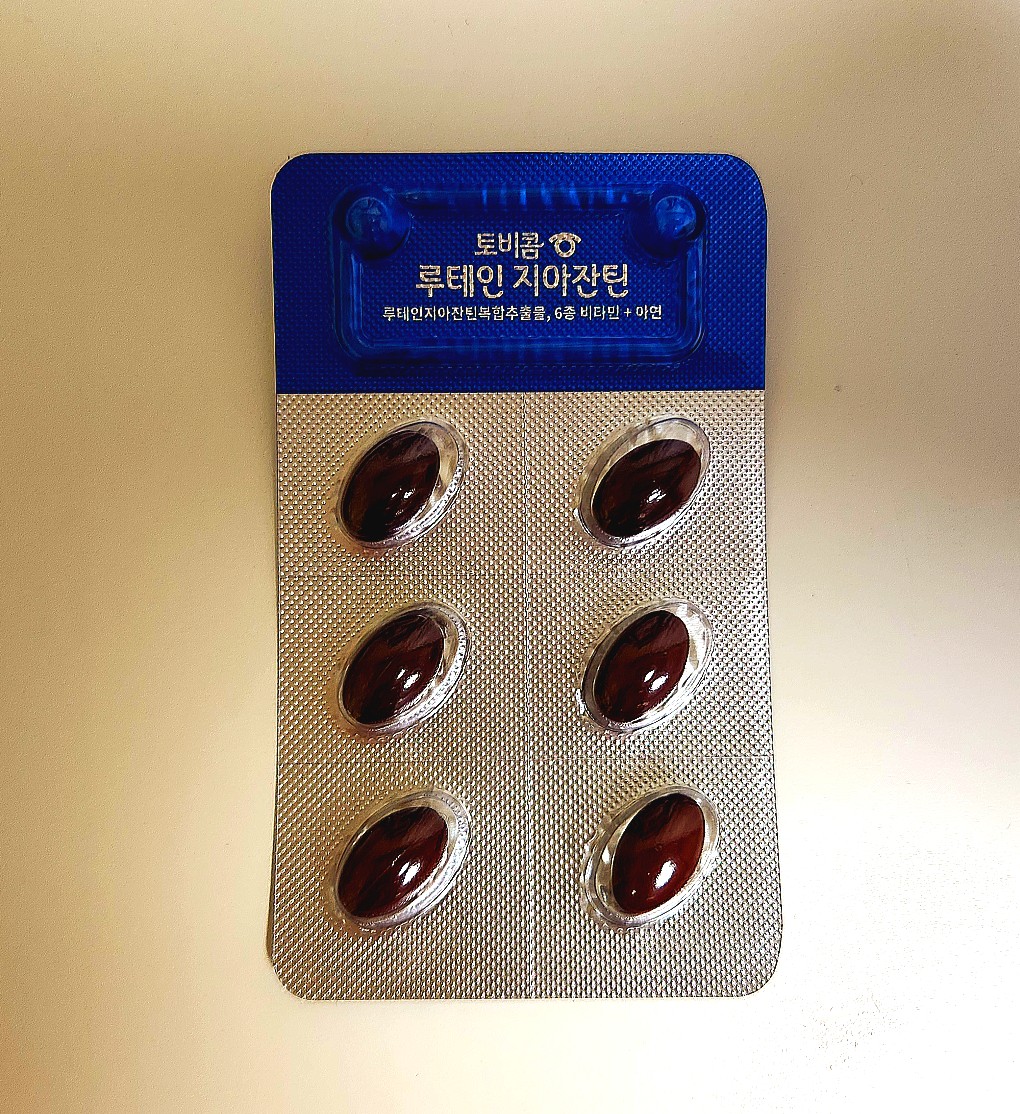
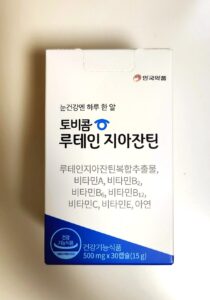
(I personally purchased this supplement. This is not medical advice.)
Why floaters happen in the first place
Your eye is filled with a clear gel called the vitreous humor — it takes up about 80% of your eye’s volume. When you’re young, this gel is firm and uniform. The collagen fibers inside are evenly distributed and transparent.
As you age — or if you spend a lot of time staring at screens — the vitreous slowly liquefies. The collagen fibers clump together. Those clumps cast tiny shadows on your retina.
That’s what eye floaters are. Not the clumps themselves — the shadows they make. If you’ve been searching for eye floaters lutein information, this mechanism is exactly why the connection exists.
Here’s what accelerates this process:
- Oxidative stress — free radical damage breaks down the collagen structure faster
- Blue light exposure — high-energy light from screens creates oxidative stress in eye tissue
- Dehydration — the vitreous is roughly 98% water
- Age — vitreous liquefaction is a normal aging process, just sped up in some people
- Myopia — nearsighted eyes have a slightly elongated shape that stresses vitreous structure
I spend most of my day in front of a monitor. I’m nearsighted. I noticed my floaters getting more noticeable in my early 30s. None of that surprised me once I understood the mechanism.
What lutein actually does for eye floaters
Lutein is a carotenoid pigment. Your body can’t produce it. You get it from food — mostly dark leafy greens and egg yolks — or supplements.
It concentrates heavily in the macula, the central part of your retina. Researchers call this the “macular pigment.” The denser it is, the better your eye can filter and neutralize high-energy blue light before it causes cellular damage.
Here’s the direct connection to floaters:
Oxidative stress is one of the primary drivers of vitreous breakdown — the exact process that creates floaters. Lutein functions as an antioxidant in eye tissue, absorbing blue light and neutralizing free radicals before they degrade the collagen structure of the vitreous.
It doesn’t reverse damage already done. But it may reduce the rate of new damage accumulating.
The largest clinical study on this — The NIH-funded AREDS2 trial, which followed over 4,000 participants for five years — found that lutein and zeaxanthin supplementation reduced the risk of advanced age-related eye deterioration by 18% compared to placebo. The mechanism was antioxidant protection of eye tissue.
That’s not a cure. That’s prevention. And prevention only works before the problem gets worse.
Zeaxanthin — why it’s always paired with lutein
The supplement I take contains lutein 16.2 mg and zeaxanthin 1.8 mg. This ratio isn’t arbitrary — it reflects where each carotenoid concentrates in the eye.
Lutein concentrates in the peripheral macula. Zeaxanthin concentrates in the center. Together they form a complete protective layer that:
- Filters blue light in the 415–455 nm range — the most damaging wavelengths from screens
- Neutralizes reactive oxygen species in retinal tissue
- Supports the structural integrity of the blood-retinal barrier
If you’re only supplementing lutein without zeaxanthin, you’re covering part of the macula. Most quality supplements include both.
Foods with the most lutein
If you’d rather get lutein through food — which is always a valid approach — these are the highest sources:
- Kale (cooked) — approximately 18–20 mg per 100g
- Spinach (cooked) — approximately 12 mg per 100g
- Egg yolks — lower total amount but the most bioavailable form
- Corn — moderate lutein, higher zeaxanthin
- Broccoli — approximately 2 mg per 100g, easy to eat daily
Two practical notes: cooking leafy greens slightly increases lutein bioavailability compared to raw. And since lutein is fat-soluble, eating it with any dietary fat — olive oil, eggs, avocado — meaningfully improves absorption.

Habits that slow vitreous breakdown
Lutein works best as part of a broader approach. These habits directly reduce the oxidative stress and strain that accelerates the process:
- 20-20-20 rule — every 20 minutes of screen time, look at something 20 feet away for 20 seconds. This reduces intraocular pressure buildup.
- Monitor distance — keep screens at least 50–60 cm from your eyes
- Hydration — the vitreous is 98% water; chronic mild dehydration matters more than most people think
- Sleep — intraocular pressure fluctuates significantly during sleep deprivation
- Blue light filtering — evening screen settings reduce cumulative daily exposure
When floaters are not harmless
Most floaters are benign — a nuisance, not a danger. But these symptoms require same-day emergency eye care, not a supplement:
- A sudden dramatic increase in floaters
- Flashes of light in your peripheral vision
- A dark shadow or curtain moving across your visual field
- Any sudden vision loss
These can indicate posterior vitreous detachment or retinal detachment — conditions where delay causes permanent damage.
So why do I keep taking it
I started noticing floaters more frequently in my early 30s. I spend most of my day looking at screens. I’m not going to change that reality significantly.
What I can do is give my eyes the nutrients they need to handle that exposure better — and reduce the oxidative burden that speeds up vitreous breakdown over time.
Lutein won’t fix the floaters I already have. But if it slows down the rate at which I accumulate new ones over the next 10, 20, 30 years — that’s worth a daily supplement to me.
Not a cure. A reasonable investment in something you can’t replace.