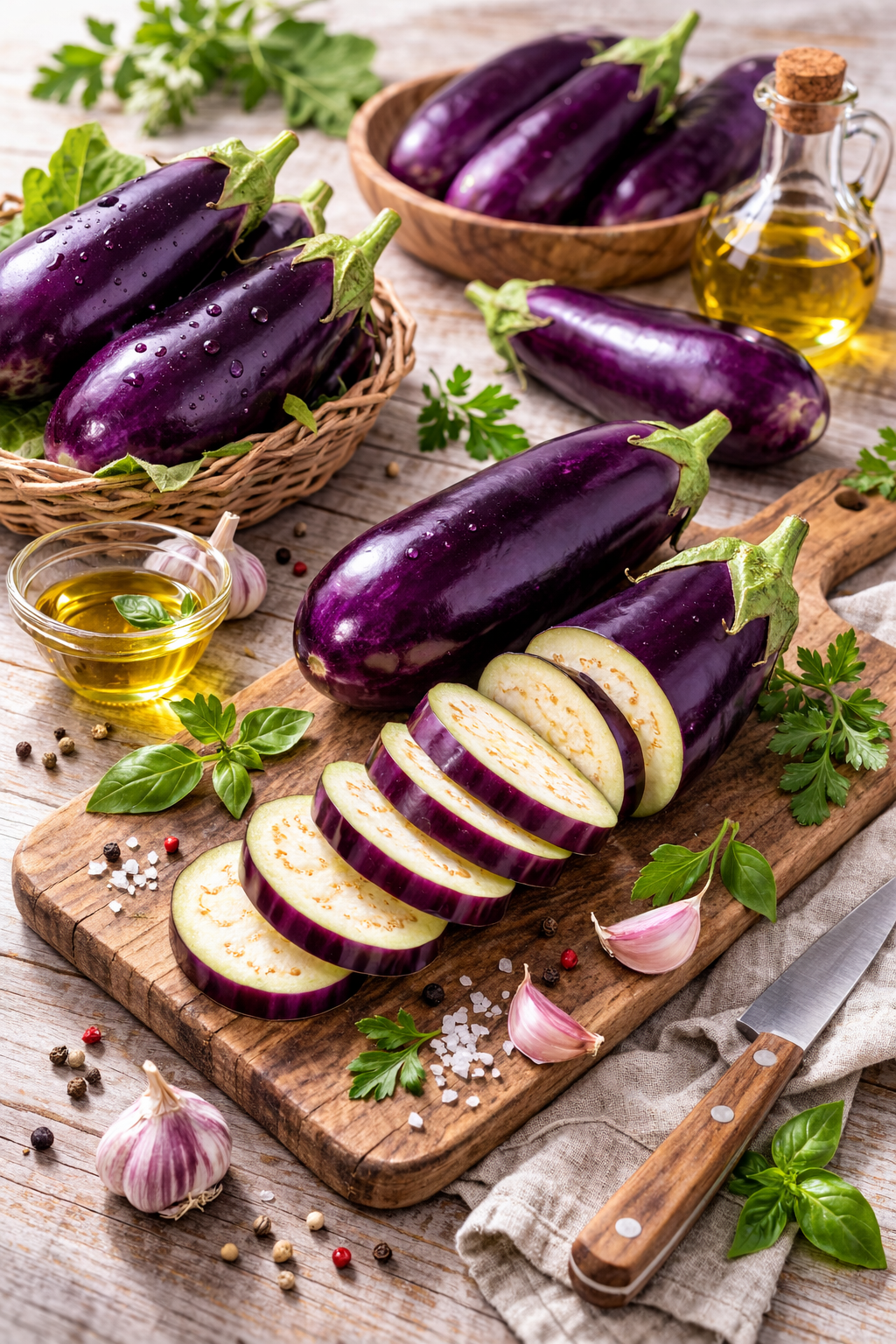
Eggplant has a glycemic index of 15 — making it one of the best vegetables for blood sugar control. It contains a compound called nasunin that research shows can inhibit the enzyme responsible for converting starch into blood sugar — by as much as 60%. On paper, it’s one of the most blood sugar-friendly vegetables you can eat.
And then someone turns it into Eggplant Parmesan.
Bread it, fry it, layer it with marinara and mozzarella — and you’ve taken a GI 15 vegetable and buried it under 20–30 grams of refined carbohydrates, significant saturated fat, and a sauce that often contains added sugar. The eggplant is still doing its job. Everything around it isn’t.
This is the eggplant problem. Not the vegetable — the dish.
zucchini and blood sugar
Why Eggplant Is Good for Blood Sugar Control

Raw eggplant contains approximately 6 grams of carbohydrates per 100g, with about 3 grams of fiber — giving it a net carb count of around 3 grams. At 25 calories per 100g, it’s one of the lowest-calorie vegetables available. Its glycemic index of 15 means it produces almost no meaningful blood glucose response on its own.
But the more interesting story is what’s in the skin.
Eggplant — particularly the purple skin — contains nasunin, an anthocyanin antioxidant found almost exclusively in eggplant. A study from the University of Massachusetts found that eggplant extracts inhibited an enzyme called alpha-glucosidase, which converts starch into glucose in the digestive system. The inhibition was as high as 60% — meaning eggplant compounds may actively slow the rate at which carbohydrates from a meal become blood sugar.
Eggplant also contains chlorogenic acid, another antioxidant that research suggests may enhance insulin sensitivity and reduce oxidative stress on the cells involved in glucose metabolism.
This is why eggplant isn’t just a neutral food for blood sugar — it may actively support blood sugar management when prepared correctly.
The Eggplant Parmesan Problem
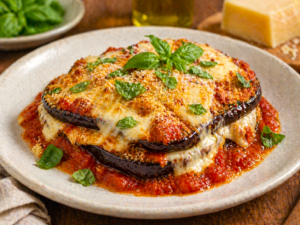
Eggplant Parmesan is one of America’s most popular Italian-American dishes. It’s also one of the most misleading “vegetable dishes” on any menu.
Here’s what a typical restaurant serving contains:
- Breaded eggplant slices: 15–20g refined carbohydrates from the coating
- Marinara sauce: often contains 6–10g added sugar per cup
- Mozzarella and parmesan: significant saturated fat
- Frying oil absorbed into the spongy eggplant flesh: adds 100–150 calories per serving
A full restaurant serving of Eggplant Parmesan can contain 300–600 calories and 25–40 grams of carbohydrates — most of it from the coating and sauce, not the eggplant itself.
The vegetable inside still has a GI of 15. But the combined glycemic load of the dish is far higher. This is the same pattern as fried zucchini or battered vegetables — the coating changes everything, not the vegetable.
Eggplant Blood Sugar Impact by Cooking Method
Grilled or Roasted — Best Option

Grilling or roasting eggplant with a small amount of olive oil keeps it close to its raw nutritional profile. No added carbohydrates, minimal fat, and the nasunin in the skin remains intact. This is the cooking method that preserves everything beneficial about eggplant while making it actually enjoyable to eat.
Sautéed or Stir-Fried — Good
A quick sauté in olive oil works well. Eggplant absorbs oil readily, so using a light hand matters — but the blood sugar impact stays low. Adding it to vegetable stews or curries is one of the best ways to eat it regularly.
Baked Without Breading — Good
Baked eggplant — including stuffed “eggplant boats” — maintains its low-glycemic profile as long as the filling isn’t carbohydrate-heavy. Stuffed with vegetables, lean protein, and a small amount of cheese, baked eggplant is a solid blood sugar-friendly meal.
Breaded and Fried — The Problem
As outlined above, breading introduces the carbohydrates — not the eggplant. The spongy texture of eggplant also absorbs significantly more frying oil than denser vegetables, which compounds the caloric impact. Deep-fried eggplant can exceed 200 calories per 100g compared to 25 calories raw.
Eggplant Parmesan — Depends Entirely on Preparation
A lighter version — roasted rather than fried eggplant, sugar-free marinara, moderate cheese — can be significantly better for blood sugar than the restaurant standard. The dish itself isn’t the problem; the traditional preparation method is.
A Lighter Eggplant Parmesan That Doesn’t Spike Blood Sugar
You don’t have to give up Eggplant Parmesan entirely. The changes that matter:
- Skip the breadcrumb coating. Roast eggplant slices directly with olive oil instead of breading and frying.
- Use sugar-free marinara. Many commercial marinara sauces add 6–8g of sugar per serving. Check the label or make your own.
- Use moderate cheese. A thin layer of mozzarella is fine — the blood sugar impact is minimal. The problem is the layers of breading underneath it.
- Keep the skin on. The nasunin and fiber are concentrated in the skin. Peeling eggplant removes most of its blood sugar benefits.
This version has a fraction of the carbohydrates and still tastes like Eggplant Parmesan — because it still is Eggplant Parmesan, just prepared in a way that doesn’t undo what the eggplant was doing for you.
Eggplant Cooking Method Comparison
| Cooking Method | Blood Sugar Impact | Notes |
|---|---|---|
| Raw | ✅ Lowest | Maximum nasunin, maximum fiber |
| Grilled or roasted | ✅ Low | Best everyday method |
| Sautéed (light oil) | ✅ Low | Keep skin on for full benefits |
| Baked (no breading) | ✅ Low | Good for stuffed preparations |
| Breaded and fried | ❌ High | Coating adds 15–20g refined carbs |
| Eggplant Parmesan (traditional) | ❌ High | Breading + sugary sauce = blood sugar spike |
| Eggplant Parmesan (lighter version) | ✅ Low–Moderate | Roasted, no breading, sugar-free sauce |
Frequently Asked Questions
Does eggplant spike blood sugar?
Plain eggplant — grilled, roasted, or sautéed — does not meaningfully spike blood sugar. With a GI of 15 and only 3g net carbs per 100g, it has virtually no blood glucose impact on its own. The spike comes from what’s added to it: breading, sugary sauces, and frying oil. Learn more about eggplant’s full nutritional benefits at Healthline.
Is Eggplant Parmesan bad for blood sugar?
Traditional restaurant-style Eggplant Parmesan — breaded, fried, with marinara containing added sugar — can contain 25–40g of carbohydrates per serving, most from the coating and sauce. A lighter version made with roasted eggplant and sugar-free marinara is significantly better for blood sugar.
Should you keep the skin on eggplant?
Yes — especially for blood sugar benefits. The nasunin and anthocyanins that may inhibit blood sugar enzymes are concentrated in the purple skin. Peeling eggplant removes most of these compounds along with a significant portion of the fiber.
Is eggplant better than zucchini for blood sugar?
Both have a GI of 15 and similarly low carbohydrate content. Eggplant has a slight edge in terms of active blood sugar compounds — nasunin and chlorogenic acid have more direct research support than zucchini’s antioxidants. But the difference is small, and both are excellent choices for blood sugar management.
Eggplant is genuinely one of the better vegetables for blood sugar — not just neutral, but potentially active in slowing glucose absorption. The research on nasunin is more compelling than most food-blood sugar claims you’ll read online.
The problem was never the eggplant. It was always the breadcrumbs.