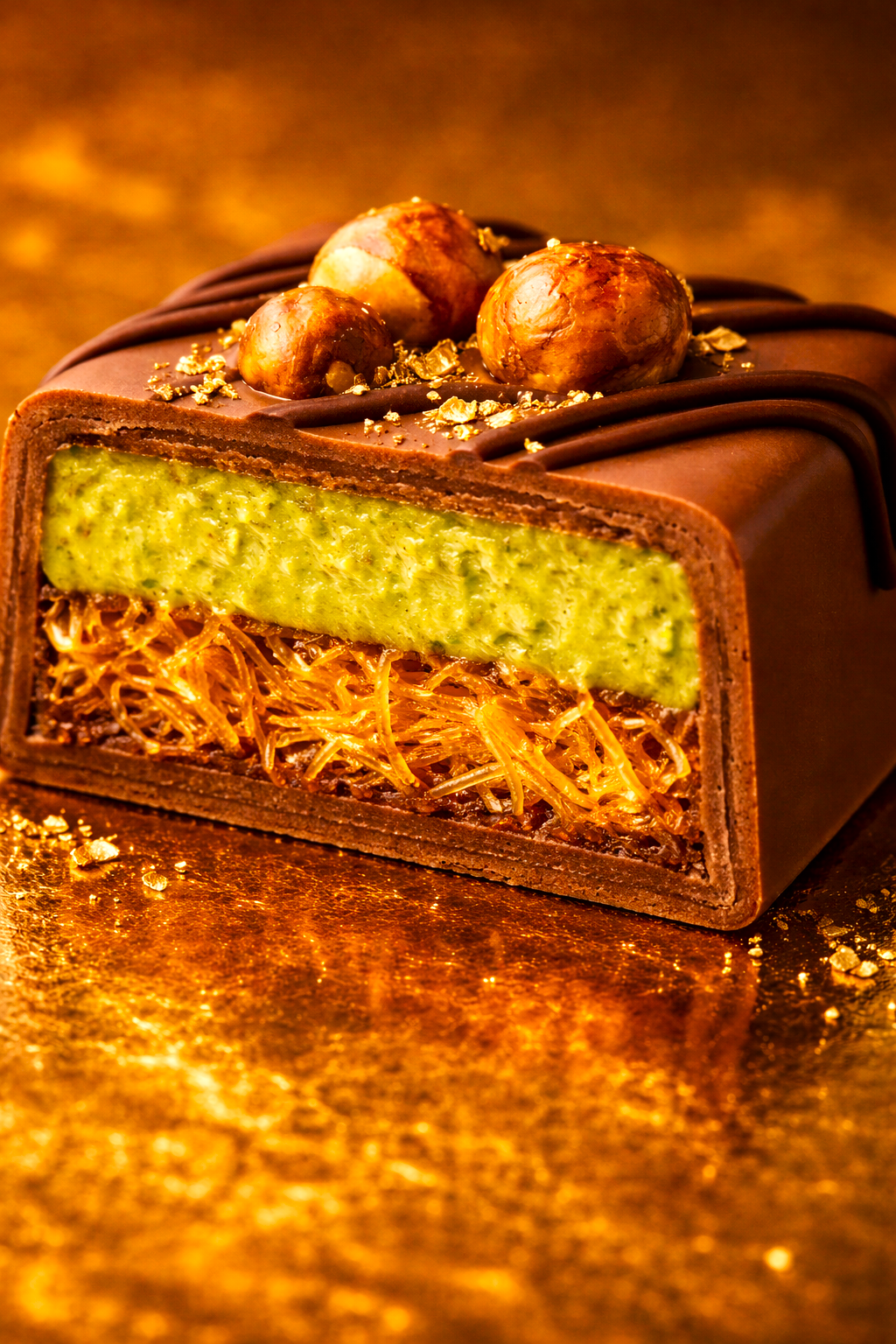
A chocolate bar sold for £15 in Dubai sold out its entire daily stock of 500 bars within hours — every single day. Then TikTok found it, and within weeks, social conversations around it exploded by 1,259% year-over-year. Pistachio prices jumped 34% globally. Lindt, Shake Shack, and Dunkin’ Donuts all launched versions. Over 1.2 million bars were sold in the UAE alone in Q1 2025.
The bar is called “Can’t Get Knafeh of It,” made by Fix Dessert Chocolatier in Dubai. And the reason it went so viral isn’t just marketing. There’s actual science behind why this specific combination of ingredients — pistachio, kataifi pastry, and chocolate — is so difficult to stop eating.
This article breaks down what’s actually in it, why it works, and what the research says about the nutritional side of the ingredients driving this global obsession.
What’s Actually Inside the Dubai Chocolate Pistachio Bar
The original bar has three core components, and each one is doing something specific:
Milk chocolate shell: The outer layer provides the familiar sweetness and fat that triggers the initial reward response. Chocolate stimulates the release of dopamine and serotonin — neurotransmitters associated with pleasure and mood. This is well-established food science, not marketing language.
Pistachio cream filling: A smooth paste made from ground pistachios, often combined with tahini (sesame paste). Rich, nutty, slightly savory — it creates flavor complexity that plain chocolate doesn’t have. The fat content creates a lingering mouthfeel that extends the sensory experience.
Kataifi pastry (카타이프): This is the ingredient most people have never encountered before. Kataifi is a Middle Eastern shredded wheat pastry — thin, thread-like strands that are toasted until golden and crispy. Mixed into the pistachio filling, it creates an unexpected crunch inside the smooth chocolate shell. That textural contrast — snap of chocolate, creaminess of pistachio, crunch of kataifi — is the sensory hook that makes the bar so distinctive.
The combination wasn’t accidental. Sarah Hamouda, who founded Fix Dessert Chocolatier in Dubai in 2021, created the bar to satisfy her own pregnancy cravings — specifically the craving for kunafa, a traditional Middle Eastern dessert made with kataifi and cheese. She translated those flavors into a portable chocolate format. The result went viral on TikTok with over 100 million views.
Why This Combination Is So Hard to Stop Eating — The Science
Food scientists have a term for what makes certain foods unusually compelling: dynamic contrast. It refers to the combination of multiple textures or temperatures in a single bite that keeps the brain engaged and delays the onset of sensory-specific satiety — the mechanism by which the brain signals that you’ve had enough of a particular taste.
When a food has only one texture and flavor, the brain adapts to it quickly. Eating becomes monotonous. But when each bite delivers a different sensory experience — the snap of chocolate, then creaminess, then an unexpected crunch — the brain stays interested longer. This is the same principle behind why potato chips are hard to stop eating, why good ice cream has mix-ins, and why the Dubai chocolate bar generates so many “one more bite” moments.
The pistachio-tahini filling adds another layer to this. Tahini contributes a subtle bitterness and earthiness that cuts through the sweetness of the chocolate — preventing the flavor from becoming cloying. This balance between sweet and savory is a known driver of palatability. Foods that hit both registers simultaneously tend to be rated as more satisfying and more craveable than foods that are purely sweet.
What the Research Actually Says About Pistachios
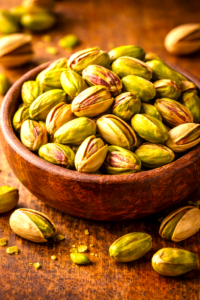
Here’s where the story gets more interesting than most food trend articles let on. The pistachio at the center of this dessert is nutritionally remarkable — and not in the vague, marketing-speak way.
A 2022 Cornell University study published in the journal Nutrients found that pistachios have antioxidant capacity higher than blueberries, pomegranates, cherries, and beets — foods that are routinely marketed specifically for their antioxidant content. The researchers attributed this to pistachios’ unique combination of vitamin E (particularly γ-tocopherol and β-tocopherol), carotenoids, phenolics, and flavonoids.
A review published in PMC covering multiple clinical trials found that pistachios have a low glycemic index despite containing more carbohydrates than most nuts — meaning they don’t cause the blood sugar spike associated with most sweet snacks. The same review found that regular pistachio consumption was associated with improved lipid profiles, reduced oxidative stress, and better vascular health.
Pistachios are also one of the few plant-based sources of complete protein — containing all nine essential amino acids. A single one-ounce serving (about 49 kernels) provides meaningful amounts of protein, fiber, vitamin B6, copper, phosphorus, and thiamin.
This doesn’t make the Dubai chocolate bar a health food. The milk chocolate shell and the quantities of pistachio cream involved mean the calorie count is substantial. But the pistachio component — the ingredient that gives the bar its distinctive flavor — is carrying genuinely impressive nutritional credentials that most people don’t know about when they’re eating it.
Where Did the Dubai Chocolate Pistachio Bar Actually Come From?
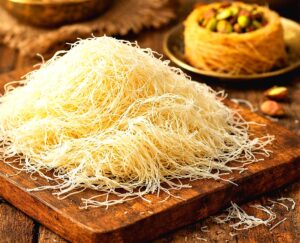
Kunafa (also spelled knafeh or kanafeh) has been a staple of Middle Eastern cuisine for centuries. Originally from the Levant region, it’s traditionally made with kataifi or semolina pastry, a filling of cheese or cream, soaked in sugar syrup, and often garnished with crushed pistachios. It’s been served at celebrations, during Ramadan, and as everyday comfort food across the Arab world for generations.
What Fix Dessert Chocolatier did was take the core flavor memory of kunafa — the combination of crispy shredded pastry, rich filling, and pistachio — and repackage it in a format that was portable, photogenic, and universally recognizable. The chocolate shell made it accessible to anyone who had never eaten kunafa. The kataifi provided the textural element that made it unlike any other chocolate bar. And the pistachio cream connected it to a flavor that was already trending globally.
The timing mattered too. By late 2023, when the bar went viral on TikTok, pistachio had already been gaining momentum as a premium ingredient in Western markets — appearing in specialty coffee drinks, high-end pastries, and luxury confectionery. The Dubai bar arrived at exactly the right moment in that trajectory.
Why the Dubai Chocolate Pistachio Trend Has Lasted Longer Than Most
Most viral food trends follow a predictable arc: rapid rise, peak saturation, fast decline. The Dubai chocolate pistachio trend has defied this pattern — and there are specific reasons why.
First, the flavor profile translates across formats. Pistachio and kataifi work in ice cream, in croissants, in milkshakes, in donuts, in cheesecakes. The trend didn’t stay locked in one product — it became a flavor language that chefs and brands could remix indefinitely. Shake Shack made it a milkshake. Dunkin’ made it a donut. Korean bakers made it a chewy marshmallow cookie. The core combination proved remarkably versatile.
Second, the pistachio component has cultural depth. Unlike many trend ingredients that are essentially novel for novelty’s sake, pistachio has genuine culinary history across Middle Eastern, Mediterranean, and South Asian cuisines. It connects to something real, which gives it longevity that purely aesthetic trends lack.
Third, the sensory experience is genuinely distinctive. A lot of viral foods look better than they taste. The Dubai chocolate bar delivers on both — which is why people who try it tend to buy it again, and why the category has sustained commercial momentum well beyond the initial TikTok spike.
Is It Worth Trying?
If you haven’t tried a Dubai chocolate pistachio bar yet, the honest answer is yes — at least once. Not because of the nutritional profile (though the pistachio component is legitimately impressive), but because the textural combination is genuinely unlike most things available in mainstream confectionery.
The original Fix Dessert Chocolatier bar remains exclusive to the UAE. But versions are now widely available across Europe, Asia, and increasingly in North American specialty stores. Lindt, various artisan chocolatiers, and a number of supermarket own-label brands have all released their interpretations.
Quality varies considerably. The best versions use real pistachio paste (not pistachio flavoring) and properly toasted kataifi that retains its crunch inside the chocolate. Cheaper versions often use artificial pistachio flavoring and pre-softened pastry that loses the textural contrast that makes the bar distinctive in the first place. If you’re going to try it, it’s worth finding a version that uses real ingredients.
The Bottom Line
The Dubai chocolate pistachio bar went viral because it accidentally assembled a near-perfect combination of food science principles: dynamic textural contrast, sweet-savory balance, dopamine-triggering chocolate, and an ingredient — pistachio — with genuine flavor complexity and nutritional depth that most snack foods don’t have.
dynamic textural contrast, sweet-savory balance, dopamine-triggering chocolate, and an ingredient — pistachio — with genuine flavor complexity and nutritional depth that most snack foods don’t have.
The trend has lasted because the flavor profile translates across formats and connects to real culinary tradition. And the pistachio at its center — which Cornell University research found to have higher antioxidant capacity than blueberries and pomegranates — turns out to be considerably more nutritionally interesting than its role in a viral dessert might suggest.
It’s still a chocolate bar. But it’s a more interesting one than most.
Related reading:
- Onion Health Benefits: 7 Reasons Onions Are Good for Your Heart
- You’ve Been Throwing Away the Most Nutritious Part of the Onion