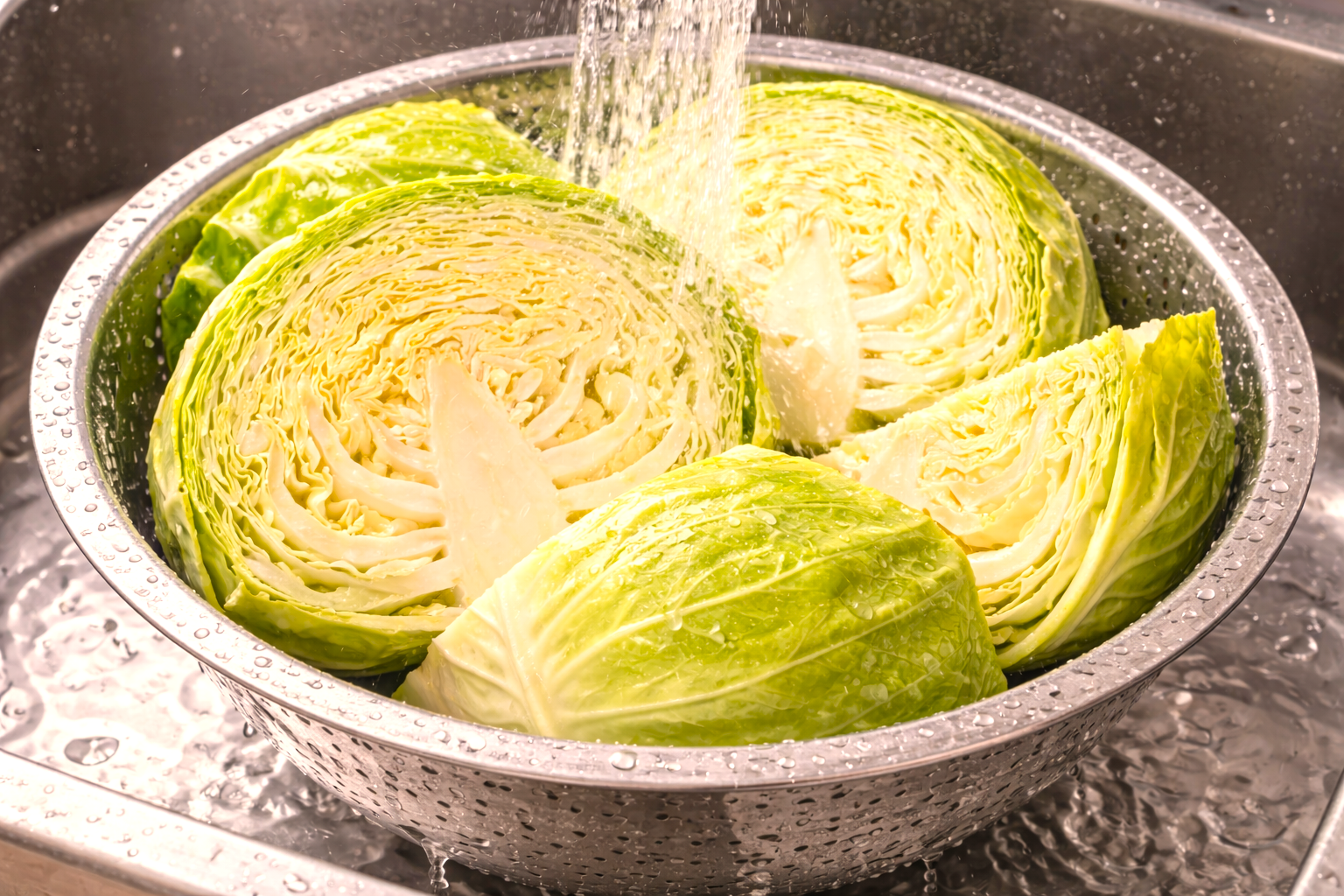
Knowing how to wash cabbage properly before cooking is one of those small habits that makes a real difference in food safety and cleanliness. Cabbage often looks clean from the outside, but because its leaves are tightly layered, dirt and small particles can remain hidden between them — even when the surface appears perfectly fresh.
Instead of simply rinsing it once under the tap, using a slightly more thorough washing method can help you prepare cabbage more cleanly and confidently. In this guide, we will look at practical and realistic ways to wash cabbage at home — without making the process complicated.
Is Removing Outer Leaves Enough?
Many people believe that simply removing the outer leaves of cabbage is sufficient to clean it. This idea is partly true, but understanding how cabbage grows helps explain why washing still matters.
Cabbage grows by forming outer leaves first, then new leaves continue to develop on the inside. Because of this, dirt and any surface residue mainly affect the outer leaves. The inner leaves are relatively cleaner by comparison.
As a general rule:
• Outer leaves = higher chance of surface dirt and residue
– Inner leaves = relatively cleaner
Removing one or two outer leaves already reduces most contamination risks. However, washing the cabbage after removing the outer leaves adds an extra layer of cleanliness that is always worth doing — especially when serving cabbage raw in salads or wraps.
Can Pesticides Reach the Inside of Cabbage?
This is one of the most common concerns people have about cabbage. The reassuring answer is that most pesticide residue stays on the surface of the vegetable. While some substances can technically be absorbed by plants through the root system, it is difficult to say that significant amounts reach the inner leaves in everyday situations.
For the vast majority of home cooking situations, the most practical and effective approach is:
• Remove the outer leaves
– Wash the cabbage thoroughly with water
This method is already sufficient for everyday cooking. If you have additional concerns about pesticide residue — for example, if you are cooking for young children or prefer extra caution — the vinegar soak method described later in this guide offers a simple additional step.
How to Wash Cabbage: Easy Method at Home
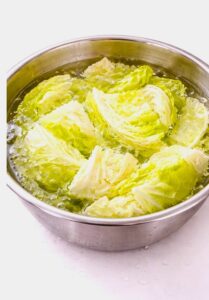
Here is a simple, effective method for washing cabbage that works for most home cooking situations:
Step 1: Remove one or two outer leaves
Peel away the outermost leaves by hand and discard them. These are the most exposed layers and are the most likely to carry surface dirt.
Step 2: Cut only the portion you plan to use
Rather than washing the entire head at once, cut the portion you need for your current meal. This way, the rest of the cabbage stays dry and fresh in the refrigerator for longer.
Step 3: Soak the cut pieces in water for 3 to 5 minutes
Place the cut cabbage pieces in a bowl of cold water and let them soak for three to five minutes. When cut, the leaves open slightly, allowing water to reach between layers and remove any dirt or debris that was trapped inside. This is significantly more effective than rinsing a whole, uncut head of cabbage.
Step 4: Rinse lightly under running water
After soaking, give the cabbage a quick rinse under cold running water to wash away anything that has been loosened during the soak.
Avoid soaking for too long — more than 10 minutes can start to soften the cabbage texture, which affects its crunch in salads and raw dishes.
Should You Wash Cabbage Before or After Cutting?
This is a question many people wonder about, and the answer depends on how you plan to use the cabbage.
For storage — If you are not cooking the cabbage immediately, it is better to wash it after cutting, just before use. Washing and then storing wet cabbage in the refrigerator can cause it to become soggy more quickly and reduce its shelf life.
For immediate cooking — Cut the cabbage first, then wash it. As mentioned above, cutting the cabbage first allows water to reach between the layers more effectively during soaking. This makes washing after cutting both cleaner and more practical.
As a simple rule: cut first, then wash — right before cooking or eating. This method is both cleaner and better for maintaining freshness.
Are Flour or Vinegar Washing Methods Necessary?
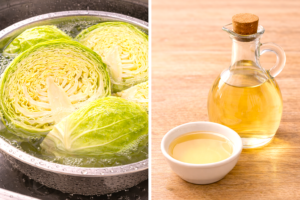
You may have seen recommendations online to wash vegetables using flour or vinegar. These methods are sometimes suggested as more thorough cleaning techniques. But are they actually necessary for everyday home cooking?
Flour Washing Method
Flour is said to help remove impurities as the particles move through water. However, in most home cooking situations, plain water washing is already enough to clean cabbage effectively. The flour method also requires additional rinsing afterward to remove the flour itself, making the process longer without a significant benefit for typical home use.
Vinegar or Baking Soda Wash
If you want an extra level of cleanliness — for example when serving raw cabbage to children or guests, or when using cabbage from an unfamiliar source — soaking it briefly in water with a small amount of vinegar or baking soda is a reasonable option.
To do this, add one to two tablespoons of white vinegar or apple cider vinegar to a bowl of cold water, add the cut cabbage, and soak for three to five minutes. Then rinse under running water.
This does not need to be done every time — it is an optional extra step for situations where you feel additional cleaning is worthwhile.
The bottom line on special washing methods: For daily cooking, plain water washing after removing the outer leaves is sufficient. Vinegar or baking soda washes are useful occasionally but are not a daily necessity.
Most Practical Washing Method Summary
For everyday home cooking, here is the simplest and most practical approach to washing cabbage:
✔ Remove one or two outer leaves
✔ Cut the portion you need
✔ Soak in cold water for 3 to 5 minutes
✔ Rinse briefly under running water
✔ Use immediately or pat dry before storing
This method takes less than five minutes and is effective for the vast majority of home cooking situations. If you occasionally want extra cleanliness, add a small amount of vinegar to the soaking water.
How to Wash Cabbage in Different Forms
The washing method can vary slightly depending on how you are preparing the cabbage:
Whole leaves (for wraps) — Separate the leaves individually and rinse each one under cold running water, paying attention to the base of the leaf where dirt tends to collect. A brief soak in a bowl of cold water for two to three minutes works well.
Shredded cabbage — Place the shredded cabbage in a colander and rinse under cold running water while gently tossing with your hands. This ensures water reaches all the shredded pieces evenly.
Quartered or halved cabbage — Soak in a bowl of cold water for three to five minutes, then rinse under running water. The soaking time allows water to penetrate between the layers.
Cabbage for cooking in soups or stir-fries — A thorough rinse under running water after cutting is usually sufficient, as the cooking process itself adds an additional layer of food safety.
My Personal Experience
Previously, I used to rinse whole cabbage quickly before cooking. After switching to cutting the cabbage first and soaking the pieces briefly in water, I noticed that dirt trapped between the layers came out much more easily and visibly.
The process felt more thorough without taking significantly more time. Now this method feels natural and reliable, and I use it consistently every time I prepare cabbage at home.
Final Summary
Learning how to wash cabbage properly is a simple but worthwhile habit for anyone who cooks with cabbage regularly. The key points to remember are:
✔ Remove outer leaves first — they carry the most surface residue
✔ Cut before washing for better water penetration between layers
✔ Soak cut pieces in cold water for 3 to 5 minutes
✔ Rinse under running water after soaking
✔ Use vinegar or baking soda occasionally for extra cleanliness
✔ Wash just before cooking, not before storing
If you are preparing cabbage today, try washing it this way once and see the difference. It takes just a few extra minutes and makes the whole preparation process feel cleaner and more confident.
For more on food safety, visit Healthline’s guide to washing vegetables.
Looking for more healthy eating ideas? Explore these related guides: