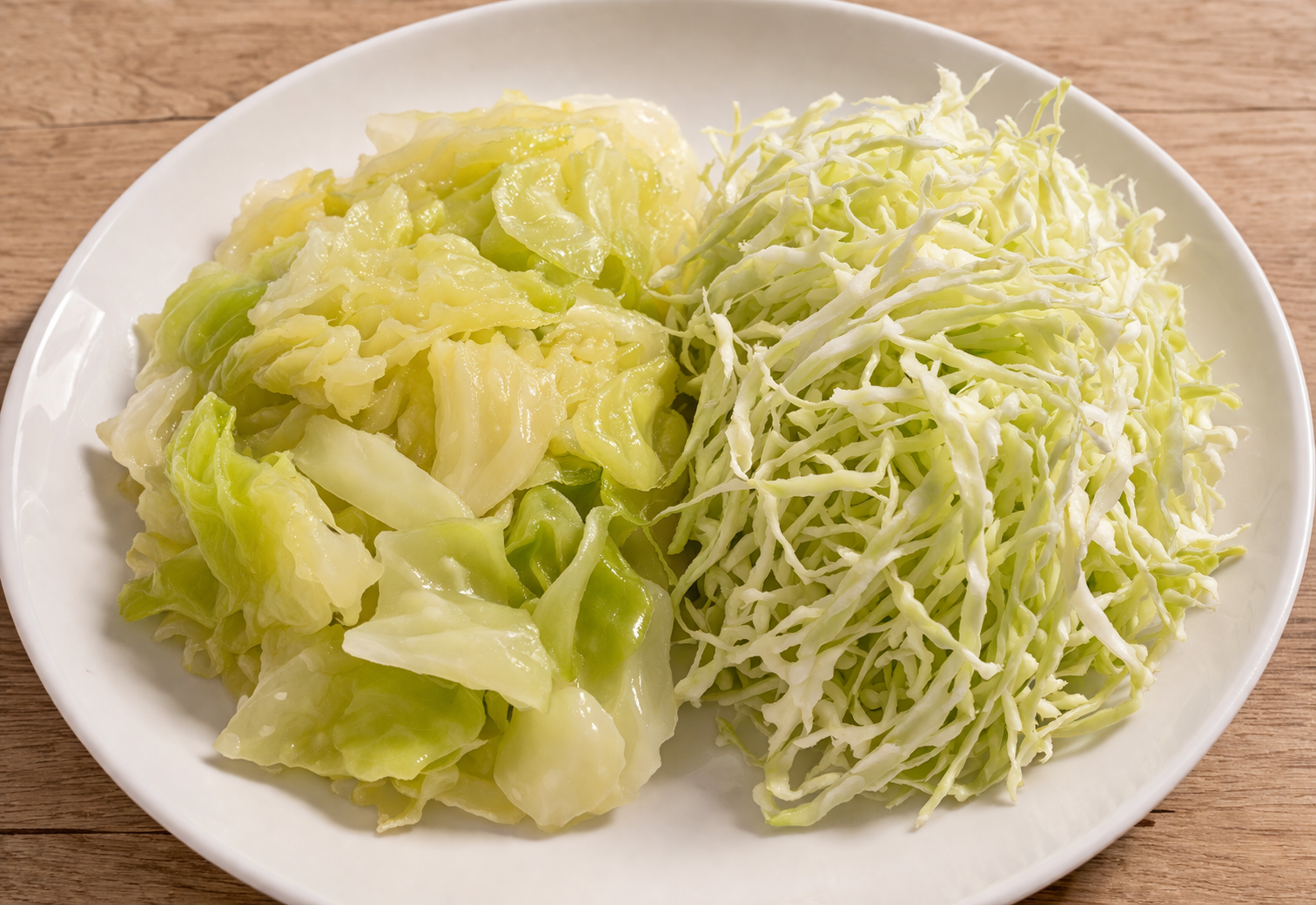
Raw vs cooked cabbage — which one is actually better for your health? This is one of the most common questions people ask when they start adding cabbage to their diet. The answer is not as simple as choosing one over the other, and understanding the difference can help you get the most out of this incredibly nutritious vegetable.
In this guide, we will look at the key differences between raw and cooked cabbage in terms of nutrition, digestibility, and practical use — so you can make the best choice for your body and lifestyle.
Why People Ask: Raw vs Cooked Cabbage?
Cabbage is widely recognized as one of the healthiest vegetables you can eat. It is affordable, versatile, and packed with vitamins, minerals, and antioxidants. But when it comes to how you eat it, many people hesitate.
Some prefer raw cabbage in salads for its crunch and freshness. Others find raw cabbage too tough or heavy on the stomach, and prefer it lightly cooked in stir-fries or soups. And some people wonder whether cooking destroys the nutrients that make cabbage so healthy in the first place.
The truth is that both raw and cooked cabbage have real health benefits — and the best approach depends on your individual needs and digestion.
Benefits of Raw Cabbage
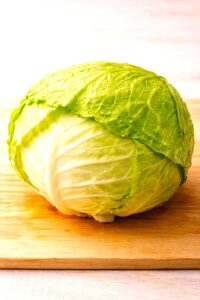
Eating raw cabbage allows you to consume the vegetable with minimal nutrient loss. Here is what raw cabbage has to offer:
Higher in Vitamin C — Vitamin C is heat-sensitive, which means cooking can reduce its content. Raw cabbage retains its full Vitamin C content, making it one of the better plant-based sources of this important antioxidant vitamin.
Rich in Digestive Enzymes — Raw cabbage contains natural enzymes that support healthy digestion. These enzymes are deactivated by heat, so eating cabbage raw preserves their digestive benefits.
Contains Gut-Supporting Compounds — Raw cabbage contains compounds such as glucosinolates and sulforaphane, which have been studied for their potential anti-inflammatory and gut-protective properties. Lightly cooking cabbage reduces these compounds, while eating it raw keeps them intact.
Crunchy Texture for Satiety — The firm, crunchy texture of raw cabbage takes longer to chew, which slows eating and can increase feelings of fullness. This makes raw cabbage a great addition to salads and slaws for anyone looking to manage their appetite.
Easy to Prepare — Raw cabbage requires no cooking time. Simply shred or chop it and add it directly to salads, wraps, tacos, or grain bowls.
Benefits of Cooked Cabbage

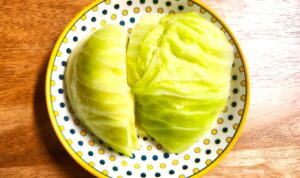
Lightly cooked cabbage is easier to digest and works beautifully in soups and warm dishes.
While raw cabbage has its advantages, cooked cabbage offers a different set of benefits that make it the better choice in many situations:
Easier to Digest — Cooking breaks down the tough cell walls in cabbage, making it significantly easier for the body to digest. For people with sensitive stomachs, irritable bowel syndrome, or those who experience bloating after eating raw vegetables, cooked cabbage is a much gentler option.
Higher Bioavailability of Some Nutrients — While cooking reduces Vitamin C, it actually increases the bioavailability of certain other nutrients. For example, the carotenoids in cabbage — which the body converts into Vitamin A — are better absorbed when the cabbage is lightly cooked with a small amount of fat.
Better for Children and Elderly Adults — Cooked cabbage has a softer texture that is easier to chew and gentler on the digestive system, making it a better option for young children and older adults.
Versatile in Cooking — Cooked cabbage works well in soups, stews, stir-fries, and warm side dishes. It absorbs flavors from other ingredients beautifully, making it a satisfying addition to a wide range of meals.
Reduces Goitrogenic Compounds — Raw cabbage, like other cruciferous vegetables, contains goitrogens — compounds that can interfere with thyroid function when eaten in very large amounts. Cooking significantly reduces these compounds, making cooked cabbage a safer choice for people with thyroid conditions.
Is There a Big Difference in Nutrition?
For most people eating normal, moderate amounts of cabbage, the nutritional difference between raw and cooked is not dramatic. Here is a simple comparison:
Vitamin C — Raw cabbage wins. Cooking reduces Vitamin C content by around 30 to 50 percent depending on the cooking method and duration.
Vitamin K — Both raw and cooked cabbage are excellent sources. Vitamin K is relatively heat-stable and is not significantly reduced by cooking.
Fiber — Both forms contain similar amounts of fiber, though cooked cabbage fiber is softer and gentler on the digestive tract.
Antioxidants — Raw cabbage retains more of its heat-sensitive antioxidants, including Vitamin C and certain glucosinolates. However, some antioxidants become more bioavailable after light cooking.
Calories — Both raw and cooked cabbage are very low in calories, typically around 20 to 25 calories per handful.
The key takeaway is this: the best cooking method is the one that gets you eating cabbage consistently. A small reduction in one nutrient is far less important than the overall habit of eating cabbage regularly.
Which Should You Choose?
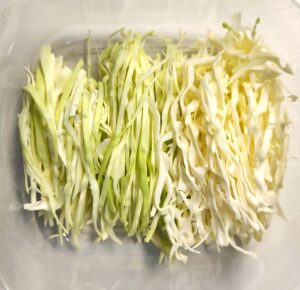
Rather than choosing one over the other permanently, the smartest approach is to eat cabbage in both forms based on how you feel and what the meal calls for:
Choose raw cabbage when:
– Your digestion feels strong and you want maximum Vitamin C
– You are making salads, coleslaws, or fresh wraps
– You want a crunchy texture and a fresh flavor
– You are eating it as a light side dish
Choose cooked cabbage when:
– Your stomach feels sensitive or you experience bloating from raw vegetables
– You are making soups, stews, stir-fries, or warm dishes
– You are cooking for children or elderly family members
– You have a thyroid condition and want to reduce goitrogens
– Warm, comforting meals feel better for your body
Alternating between raw and cooked cabbage throughout the week gives you the benefits of both forms and keeps meals varied and interesting.
Helpful Tips for Raw vs Cooked Cabbage
Here are some practical tips for getting the most out of both raw and cooked cabbage:
For raw cabbage:
If raw cabbage feels too heavy or causes bloating, try massaging shredded cabbage with a small amount of salt for two to three minutes before eating. This breaks down some of the tough fibers and makes it easier to digest without any cooking.
Soaking shredded cabbage briefly in cold water also removes some of its bitterness and adds a pleasant crispness — perfect for salads.
Large outer leaves are easier to use as wraps when raw, while shredded inner leaves work better in salads and slaws.
For cooked cabbage:
Avoid overcooking cabbage. Boiling cabbage for a long time not only destroys more nutrients but also produces sulfur compounds that give it an unpleasant smell. Lightly stir-frying or blanching for one to two minutes is enough to soften it while preserving most of its nutritional value.
Adding a small amount of olive oil or sesame oil when cooking cabbage helps the body absorb fat-soluble nutrients like Vitamin K and carotenoids more effectively.
My Personal Experience with Raw vs Cooked Cabbage
In my own experience, I started by eating raw cabbage every day and found it felt heavy on my stomach after a while. Switching to lightly cooked cabbage made a noticeable difference in how comfortable I felt after meals.
Now I alternate between both forms depending on the meal. Raw cabbage goes into salads and fresh sides, while cooked cabbage goes into stir-fries and soups. This balance feels natural and makes it much easier to eat cabbage consistently without it becoming boring.
Final Summary

When comparing raw vs cooked cabbage, there is no single winner. Both forms are healthy, nutritious, and worth including in your diet regularly.
✔ Raw cabbage is higher in Vitamin C and digestive enzymes
✔ Cooked cabbage is easier to digest and better for sensitive stomachs
✔ Both forms are low in calories and high in fiber
✔ Choosing based on your condition and the meal works best
✔ Eating both forms throughout the week gives you the full range of benefits
Try both methods, see what feels best for your body, and build the habit that works for you. Even adding cabbage a few times a week can meaningfully improve your daily vegetable intake.
For more on cabbage nutrition, visit Healthline’s cabbage nutrition guide.
Looking for more healthy eating ideas? Explore these related guides: