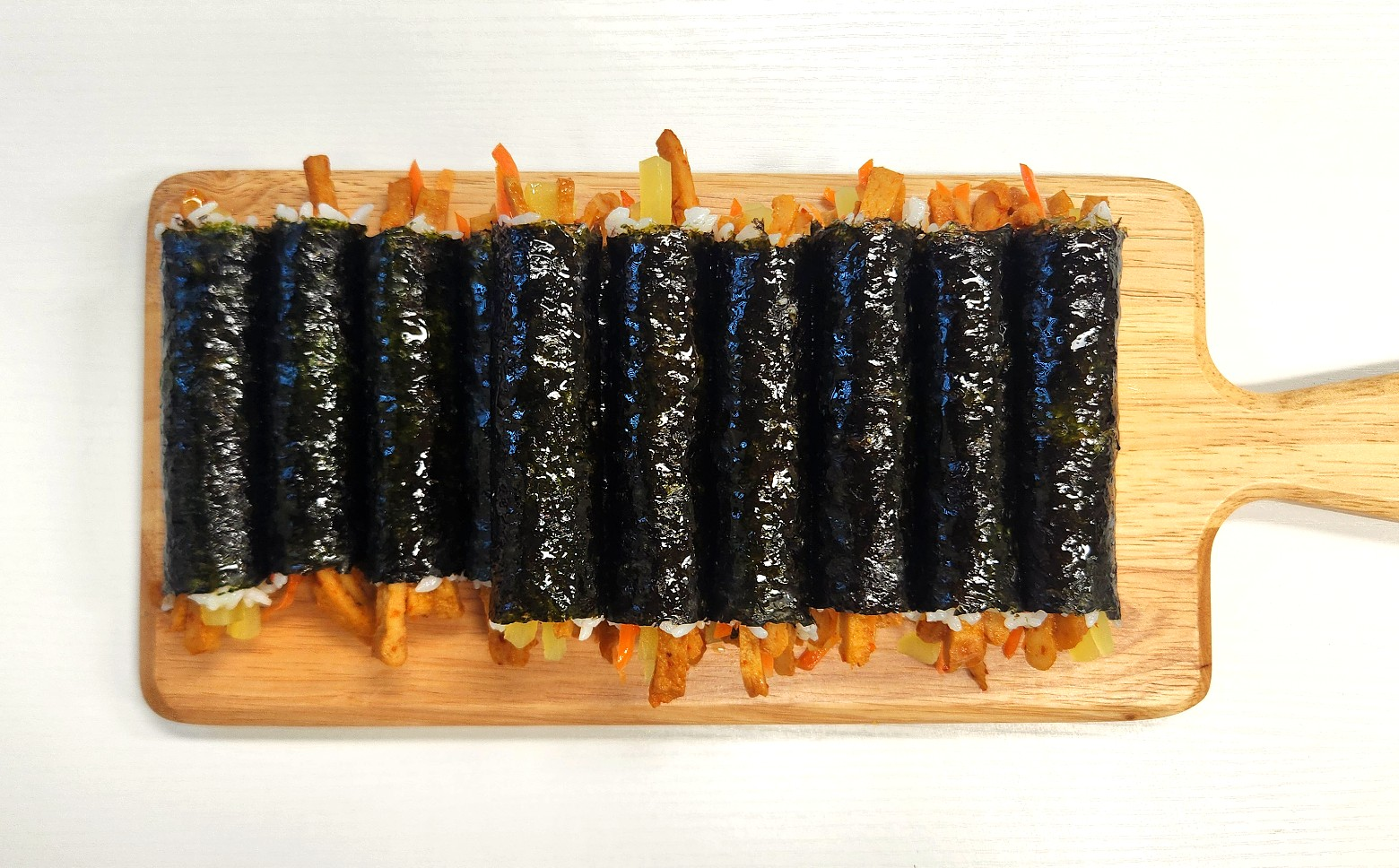
This mini kimbap recipe — known in Korean as 꼬마김밥 (Kkomagimbap) — is a smaller, bite-sized version of classic Korean gimbap, perfect for lunchboxes, picnics, or a quick snack at home.
This recipe keeps things simple. You do not need elaborate fillings or special equipment — just a bamboo rolling mat, a handful of fresh ingredients, and about 30 minutes of your time.
What Is Kkomagimbap?
Kkomagimbap (꼬마김밥) literally means “little gimbap” in Korean. Each roll is roughly half the diameter of a standard gimbap, making it easy to eat in one or two bites. It is a popular choice for school lunchboxes in Korea and is commonly sold as a street food snack.
The beauty of mini kimbap is its flexibility — you can use almost any filling you like, and the smaller size means it rolls more easily than its full-sized counterpart, making it an ideal recipe for beginners.
Ingredients (2–3 Servings)
Rice
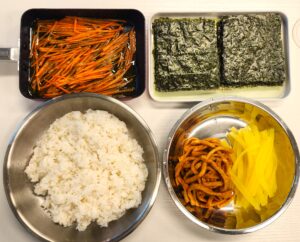
- 2 cups cooked short-grain rice (still warm)
- 1/2 teaspoon salt
- 1 teaspoon sesame oil (optional)
- 1 teaspoon sesame seeds (optional)
Fillings
- 2 sheets of roasted seaweed (nori), each cut into 4 pieces
- 1 carrot, julienned
- 1 cup seasoned fish cake strips or ham
- Pickled radish strips (danmuji), about 1 cup
- Cooking oil for stir-frying
💡 Tip: You can simplify the fillings based on what you have at home. Pickled radish and carrot alone make a perfectly good mini kimbap — no fish cake needed.
Step 1 — Prepare the Rice
Season the rice while it is still warm for the best result. Cold rice does not absorb seasoning as well and becomes harder to roll.
- Add salt to the warm cooked rice.
- Mix gently with a rice paddle — do not mash or over-stir.
- Add sesame oil and sesame seeds if using, and fold through lightly.
Set aside and allow the rice to cool slightly before rolling. Rice that is too hot will make the seaweed soggy.
Step 2 — Prepare the Fillings
Carrot
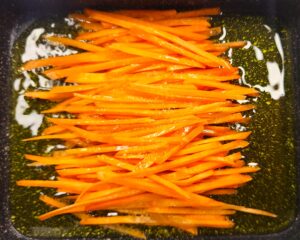
Stir-fry the julienned carrot in a lightly oiled pan with a small pinch of salt over medium heat for 2–3 minutes, until just softened. Do not overcook — the carrot should retain a slight crunch.
Fish Cake or Ham
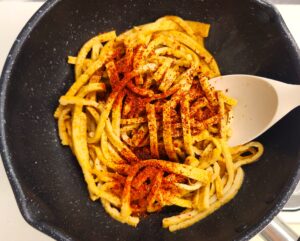
Slice thinly and stir-fry with a small amount of oil. Season lightly if needed. Korean chilli flakes (gochugaru) are optional. If you are making this for children, skip the chilli entirely.
Pickled Radish (Danmuji)
No cooking needed. Simply cut the pickled radish into thin strips that match the length of your seaweed pieces. The bright yellow colour and tangy flavour are one of the most distinctive elements of traditional kimbap.
Step 3 — Roll the Mini Kimbap
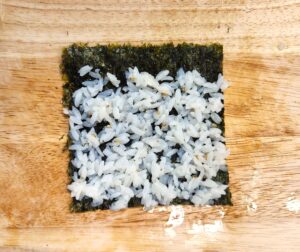
- Place one piece of seaweed (roughly half an A5 sheet) on a bamboo rolling mat or a clean flat surface, shiny side down.
- Spread a thin, even layer of seasoned rice across the seaweed, leaving about 1.5cm clear at the far edge.
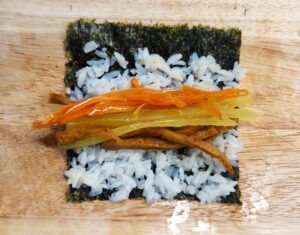
Lay fillings in a line across the centre of the rice — keep them compact and centred for a clean, tight roll. - Lay your fillings in a line across the centre of the rice — carrot, fish cake, and a strip of pickled radish.
- Using the mat, roll the seaweed tightly away from you, pressing gently as you roll to keep it firm.
- Seal the edge by pressing it against the roll. The moisture from the rice should be enough to seal it naturally.
The finished roll should be small enough to eat in one or two bites. Slice into bite-sized pieces using a sharp knife, wiping the blade between cuts for cleaner edges.
💡 Important tip: Do not overfill. Too much rice or too many fillings make rolling difficult and the roll may split. Less is more with mini kimbap.
How to Keep Mini Kimbap From Breaking
Mini kimbap breaks most often for two reasons: too much filling, or rice that is spread too thick. Keep the rice layer thin — about 5mm — and keep fillings centred and compact. A tight, consistent roll is the key to kimbap that holds together cleanly when sliced.
One technique that helps: instead of brushing sesame oil directly onto the seaweed, lightly coat your cooked vegetables with sesame oil during stir-frying. This prevents the seaweed from becoming soggy while still giving the finished roll its characteristic flavour.
Extra Tips for Better Flavour
- Use short-grain or sushi rice — its stickiness is essential for the roll to hold together. Long-grain rice will not work well.
- Season while warm — rice absorbs seasoning much better when freshly cooked and still hot.
- Wipe your knife between cuts — a clean, slightly damp blade gives you smooth, even slices without tearing the seaweed.
- Eat soon after making — mini kimbap is best eaten within a few hours. The seaweed softens over time, especially if stored in the fridge.
- Lunchbox tip — if packing for later, wrap the unsliced rolls tightly in cling film and slice just before eating to keep the seaweed crisp.
Frequently Asked Questions
Can I make mini kimbap without a bamboo mat?
Yes. A sheet of cling film or a clean kitchen towel works as a substitute. The bamboo mat helps you apply even pressure, but it is not essential for the smaller mini kimbap size.
What fillings work best for mini kimbap?
The most traditional fillings are pickled radish, carrot, and fish cake. However, you can use almost anything: cucumber strips, spinach, omelette strips, canned tuna, or even cheese. Keep fillings with a similar thickness for an even roll.
How long does mini kimbap keep?
Mini kimbap is best eaten on the day it is made. If storing, keep at room temperature for up to 4 hours (do not refrigerate uncut rolls — cold temperatures make the rice hard and the seaweed rubbery). If you must store overnight, wrap tightly and allow to come to room temperature before eating.
Is mini kimbap the same as sushi?
No. While both use rice and seaweed, kimbap and sushi are distinct dishes. Kimbap rice is seasoned with sesame oil and salt rather than rice vinegar, and kimbap is never made with raw fish. The flavour profile is noticeably different — kimbap has a nuttier, more savoury taste.
Final Thoughts
Mini kimbap is one of those recipes that looks impressive but is genuinely simple once you have made it once or twice. The key is in the details: warm, well-seasoned rice, thin fillings, and a firm, consistent roll.
Once you are comfortable with the basic version, you can experiment with different fillings and flavours. Korean home cooking is built on this kind of flexibility — use what you have, keep it balanced, and do not overthink it.
Try it this weekend, and you will wonder why you ever bought kimbap from a shop.
👉 Looking for more easy Korean recipes? Try our guide to Crispy Korean Potato Pancake (Gamja-jeon) or discover Foods That Help With Allergies for more practical nutrition guides.